Goggles lab safety guide for chemical splash and impact protection
Why goggles matter in lab safety
Effective goggles lab safety practice begins with matching eye protection to the actual hazard. In a laboratory, that hazard may be a corrosive liquid, a pressurized glass vessel, a flying fragment, a biological droplet, ultraviolet light, or a combination of risks. Ordinary prescription glasses and basic safety glasses are not enough for many splash scenarios because they do not seal around the eyes. Chemical splash goggles, indirect-vented goggles, face shields, and specialty eyewear are designed for different exposures. The practical goal is not to buy one universal pair for every task, but to give workers a clear selection process before the experiment starts.
This article focuses on practical selection and use of laboratory goggles for chemical, biological, and mechanical hazards. It is intended for educational and industry readers reviewing lab safety practices, not as a substitute for a site-specific Chemical Hygiene Plan, biosafety manual, or regulatory compliance review.
Safety glasses, splash goggles, and face shields are not interchangeable
Eye protection terms are often used loosely, but the differences affect real protection. A worker may be wearing eyewear that looks protective while liquid, dust, or droplets can still reach the eye. Laboratory supervisors should avoid generic instructions such as “wear eye protection” and specify the type required for the task.
Safety glasses
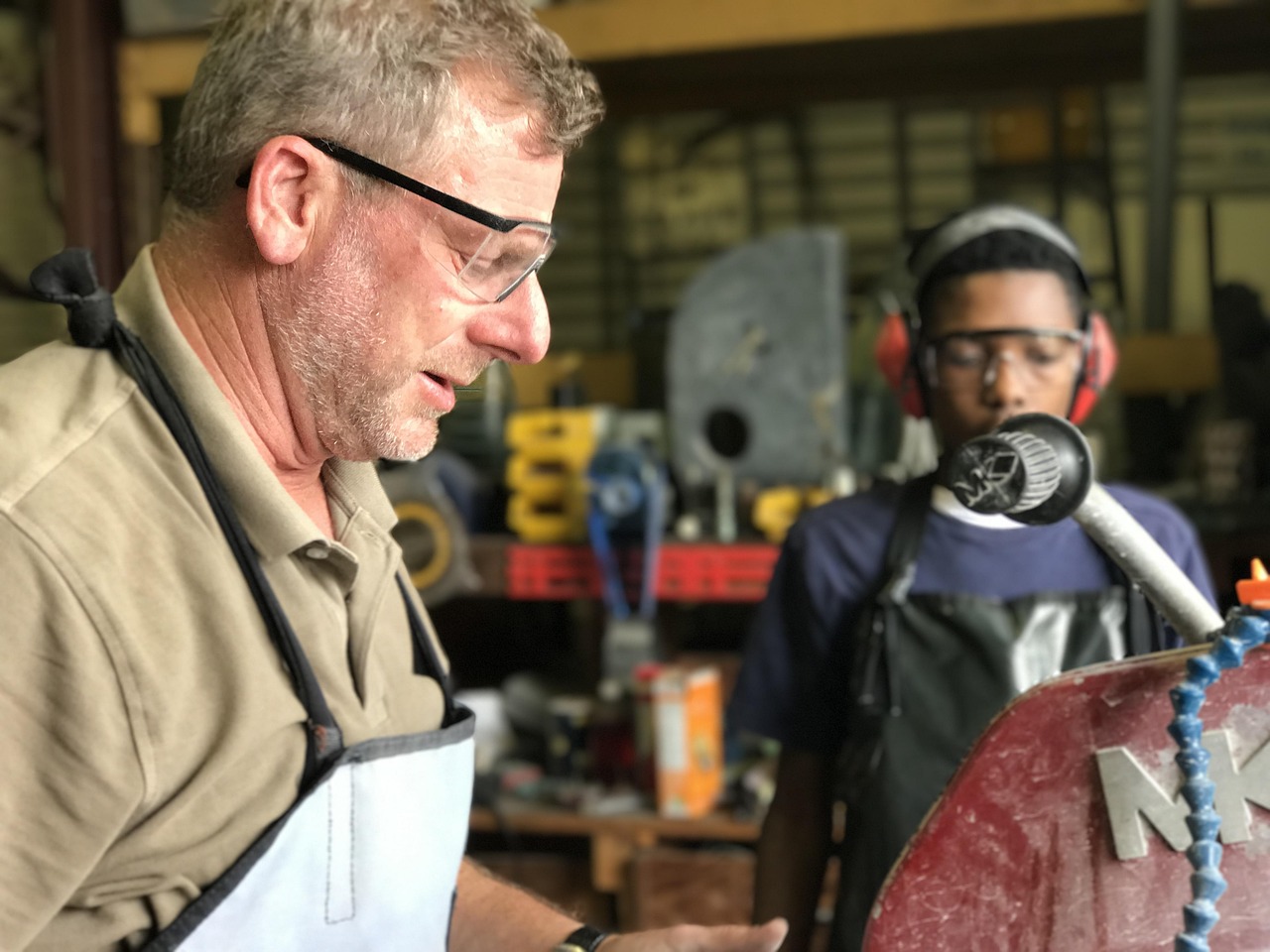
Safety glasses are useful for impact protection when the main concern is flying particles, small fragments, or routine work near low-risk equipment. Side shields improve lateral coverage, and impact-rated safety glasses are common in industrial and teaching laboratories. However, safety glasses do not seal against the face. For work with acids, caustics, solvents, infectious droplets, or procedures where liquids can splash from below or the side, safety glasses alone are usually a weak control.
Chemical splash goggles
Chemical splash goggles are designed to fit closely around the eyes and reduce the chance that liquids, sprays, or droplets will enter around the frame. The National Academies publication Prudent Practices in the Laboratory distinguishes chemical splash goggles from ordinary safety glasses because splash goggles have splash-resistant sides and provide more complete coverage around the eyes. For many wet-chemistry procedures, they are the baseline form of eye protection.
Indirect-vented or non-vented goggles are generally preferred when splash or droplet protection is the purpose. Directly vented goggles may improve airflow, but the openings can also create a pathway for liquid entry depending on the design and exposure direction. Anti-fog coatings and improved airflow can help with usability, but they do not replace proper splash protection.
Face shields
A face shield protects more of the face than goggles, including areas around the cheeks, mouth, and chin if it is long enough and wraps adequately. It is not a substitute for goggles in splash work. For corrosive liquids, larger volumes, pressurized transfers, or operations with a credible splash-to-face risk, a face shield is typically worn over safety glasses or chemical splash goggles. The shield adds facial coverage while the goggles remain the primary eye seal.
Standards and markings to check before choosing goggles
Laboratory eye protection should be selected through hazard assessment and verified against product markings, manufacturer documentation, and institutional safety requirements. In the United States, OSHA’s personal protective equipment rules require employers to assess workplace hazards, select appropriate PPE, communicate selection decisions, and ensure that PPE properly fits affected workers. OSHA’s eye and face protection rule addresses hazards such as flying particles, liquid chemicals, acids or caustic liquids, chemical gases or vapors, and harmful light radiation.
ANSI/ISEA Z87.1 is the main U.S. consensus standard family used for occupational and educational eye and face protection. As of September 2026, ANSI lists ANSI/ISEA Z87.1-2025 as the most recent revision, replacing the 2020 edition. OSHA regulatory text does not automatically adopt every new private standard when it is published, so organizations should check the OSHA rule, state-plan requirements, institutional policy, and procurement specifications before changing compliance language.
For day-to-day selection, markings are a practical screening tool. A Z87 marking indicates that the product is marked under the relevant Z87.1 framework used for the product claim. A plus sign is associated with high-impact protection in modern ANSI/ISEA marking systems. A D3 marking is commonly used to identify splash and droplet protection. Because markings vary by product type and standard edition, confirm both the marking on the protector and the manufacturer’s specification sheet before approving a model for laboratory use.
Match goggle selection to common lab hazards
A useful eyewear policy is task-based. A general rule such as “goggles required in the lab” may be appropriate for some teaching laboratories, but research, quality control, and clinical environments often need more detail. The table below summarizes common laboratory situations and the type of protection usually considered during a hazard assessment.
| Lab task or hazard | Common eye and face protection approach | Key limitation to check |
|---|---|---|
| Routine observation away from active splash, impact, or optical hazards | Safety glasses may be allowed if the site assessment permits | Not suitable if nearby work can create splash or flying fragments |
| Pouring, mixing, pipetting, or heating hazardous liquids | Chemical splash goggles, often indirect-vented or non-vented | Fit gaps and direct vents can reduce splash protection |
| Handling corrosive liquids or larger liquid volumes | Chemical splash goggles plus a face shield | A face shield alone does not seal the eyes |
| Working with pressurized, evacuated, or fragile glass apparatus | Impact-rated goggles or safety glasses, plus shielding as needed | Impact protection and splash protection are separate claims |
| Biological splashes, sprays, or infectious droplets | Well-fitted goggles, face shield, or full-face respiratory protection depending on exposure route | Prescription glasses and contact lenses do not provide infection-control protection |
| Laser, ultraviolet, infrared, or intense visible light exposure | Specialty optical protection matched to wavelength and power | Standard clear splash goggles do not provide laser or radiation protection unless specifically rated |
| Cryogenic liquid transfer | Safety glasses or goggles plus a full face shield, based on local procedure | Cold burns and splashes can affect both eyes and exposed facial skin |
The key point is that one protector may address one hazard while leaving another uncontrolled. High-impact safety glasses may be poor splash protectors. Comfortable splash goggles may not be rated for optical radiation. A face shield may protect facial skin but still allow liquid to travel around the edges if goggles are not worn underneath.
Fit, compatibility, and usability decide whether protection works
Even well-specified goggles can fail if they do not fit the worker. A goggle should sit securely against the brow and cheek area without large gaps. The strap should hold the frame in place during normal head movement. If the wearer has prescription glasses, the goggle must fit over them without lifting the seal or pressing the temples into the face. Some programs may use prescription inserts or prescription safety eyewear, but prescription safety glasses should not be assumed to provide splash protection unless the product is specifically designed and approved for that hazard. See also: buying guides.
Compatibility with other PPE is another common weakness. Half-mask respirators, face shields, hard hats, hearing protection, and masks can all change the way goggles sit on the face. CDC and NIOSH infection-control guidance emphasizes that eye protection selection should consider other PPE and individual vision needs. In practical terms, a laboratory should test the full PPE combination before work begins, not after workers discover fogging, slipping, pressure points, or blocked vision during a procedure.
Comfort is not a minor issue. If goggles fog, pinch, distort vision, or interfere with respirator fit, workers may lift them during the highest-risk moment. Anti-fog coatings, indirect-vent designs, multiple frame sizes, and clear cleaning procedures can improve compliance. However, a more comfortable model must still meet the required hazard rating. A comfortable but unrated goggle is not a safe substitution.
Cleaning, storage, replacement, and training
Reusable lab goggles need a defined cleaning and storage process. After chemical work, workers should follow the laboratory’s decontamination procedure and the manufacturer’s cleaning instructions. After biological splash risk, goggles should be handled as potentially contaminated until cleaned and disinfected according to the site protocol. CDC guidance for infection-control eye protection recommends handling eyewear by the strap or securing parts during removal because the front and sides may be contaminated.
Inspection should happen before use, not only after an incident. Check for cracked lenses, loose straps, damaged vents, hardened seals, deep scratches, clouding, chemical attack, or missing markings. Scratched or hazed lenses can reduce visibility and encourage unsafe workarounds. Stiff or damaged seals can create gaps. Goggles that have been struck, chemically degraded, or contaminated beyond safe cleaning should be removed from service.
Training should be specific enough that workers can answer five questions before starting a task: What is the eye hazard? What protector is required? Does this model have the right rating or marking? Does it fit with the rest of my PPE? What should I do if it becomes contaminated, fogged, damaged, or uncomfortable during the procedure? If a policy cannot answer those questions, it may look complete on paper but fail in practice.
Practical selection checklist for laboratory goggles
- Start with a written hazard assessment for the task, not a generic product preference.
- Identify whether the primary concern is splash, impact, droplets, dust, optical radiation, or multiple hazards.
- Use chemical splash goggles for credible liquid splash risks, especially with corrosives or hazardous chemicals.
- Add a face shield when facial splash, larger volumes, corrosive liquids, pressure, or high-energy release is possible.
- Check for appropriate ANSI/ISEA Z87.1 markings and confirm claims in manufacturer documentation.
- Do not treat ordinary prescription glasses or contact lenses as protective eyewear.
- Test goggles with respirators, masks, face shields, and other PPE before approving routine use.
- Provide more than one size or style if a single model does not fit all workers securely.
- Define cleaning, disinfection, storage, and replacement criteria in the lab procedure.
- Review eyewear choices after near misses, splashes, fogging complaints, or process changes.
Frequently asked questions
Are safety glasses enough for a chemistry lab?
Sometimes, but not for many wet-chemistry tasks. Safety glasses can be appropriate for impact or low-splash situations if the hazard assessment permits them. When hazardous liquids, corrosives, sprays, or splashes are credible, chemical splash goggles are usually the more appropriate eye protection.
Should a face shield replace goggles?
No. A face shield adds protection for the face, but it does not create the same sealed eye coverage as goggles. For high-splash or corrosive-liquid work, the common approach is goggles under a face shield, not one or the other.
Can workers wear contact lenses in the lab?
Contact lenses do not count as eye protection. Whether they are allowed depends on institutional policy and the hazards involved, but they must be worn only with appropriate protective eyewear. Workers should also follow strict hand hygiene when inserting, adjusting, or removing contact lenses.
What does D3 mean on lab goggles?
D3 is a splash and droplet marking used in ANSI/ISEA eye and face protection systems. It is useful when selecting goggles for liquid splash risks, but buyers should verify the complete product marking, the edition of the standard referenced, and the manufacturer’s documentation.
How often should lab goggles be replaced?
There is no single replacement interval that fits every laboratory. Replace goggles when lenses are cracked, deeply scratched, cloudy, chemically damaged, or hard to see through; when straps or seals no longer hold a secure fit; after significant impact; or when the manufacturer or site procedure requires replacement.