Lab safety checklist for chemical hygiene, risk assessment, and hazard communication
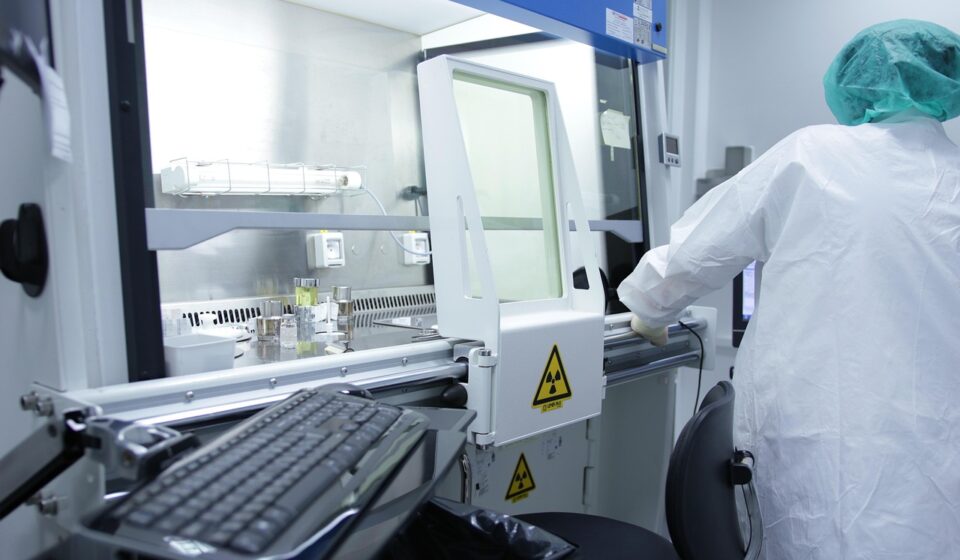
What lab safety means in a working laboratory
Lab safety is not just a set of rules posted near the door. In a working laboratory, it is the system used to identify hazards before work starts, select controls that fit the risk, train people to use those controls correctly, and check whether the program still matches the work being done. For U.S. laboratories that handle hazardous chemicals, OSHA’s Laboratory Standard, 29 CFR 1910.1450, makes the written Chemical Hygiene Plan a central part of that system. For biological work, CDC and NIH biosafety guidance emphasizes protocol-driven risk assessment rather than one-size-fits-all assumptions.
This checklist focuses on practical decisions: what needs to be planned before an experiment, which equipment and documents must be maintained, and how laboratories can avoid treating personal protective equipment as the first or only barrier. It is intended for research, education, clinical, quality control, and industrial laboratories that need to connect daily work with recognized safety expectations. For more articles in this topic area, visit the lab safety section.
Start with risk assessment before routine work
A useful safety program starts before a reagent is opened or an instrument is switched on. OSHA’s non-mandatory laboratory guidance and the National Academies’ Prudent Practices in the Laboratory both emphasize identifying hazards and choosing controls before laboratory work begins. CDC’s biological risk assessment guidance follows the same basic sequence: identify hazards, evaluate risk, implement mitigation, and then check whether the controls remain effective.
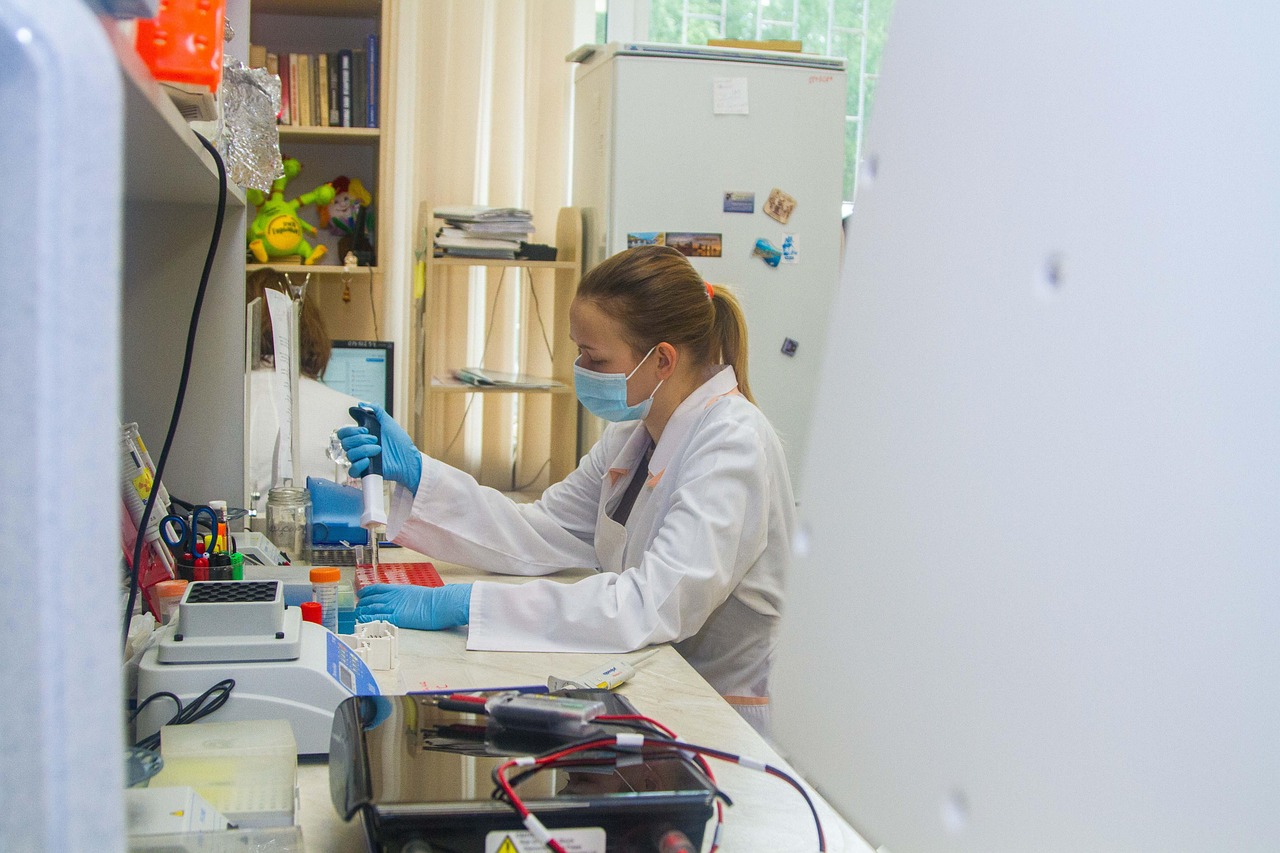
The key question is not simply whether a substance or sample is “dangerous.” It is how harm could occur under the actual conditions of use. A corrosive liquid in a sealed manufacturer container presents a different risk from the same liquid during transfer, heating, pressure work, or waste consolidation. A biological specimen in a closed tube presents a different risk from the same specimen during vortexing, centrifugation, or pipetting steps that may generate droplets or aerosols.
Before work begins, a laboratory should document at least the following:
- The chemicals, biological materials, physical hazards, or energy sources involved.
- The quantity, concentration, temperature, pressure, and duration of the work.
- The possible routes of exposure, including inhalation, skin contact, eye contact, ingestion, sharps injury, or aerosol generation.
- The equipment used, such as fume hoods, biosafety cabinets, centrifuges, vacuum systems, heating devices, pressure vessels, lasers, or cryogenic systems.
- The controls required before work is authorized.
- The response steps for a spill, exposure, fire, release, equipment failure, or power loss.
Scale changes need particular attention. A procedure that is reasonable at milliliter scale may create unacceptable heat, pressure, vapor, splash, or waste hazards when expanded. Scale-up, unattended operations, new equipment, unfamiliar reagents, and changes in personnel should therefore trigger a fresh review rather than relying on a previous approval.
Keep the Chemical Hygiene Plan active and specific
For laboratories covered by OSHA’s Laboratory Standard, the Chemical Hygiene Plan is not meant to be a generic binder. It is a written program that describes the procedures, equipment, personal protective equipment, and work practices capable of protecting employees from the health hazards of hazardous chemicals used in that particular workplace. The standard also requires the plan to be readily available to employees and reviewed at least annually.
A strong plan is specific enough for a new researcher, technician, student, or visiting worker to understand what is required in that laboratory. It should not only say “wear appropriate PPE.” It should explain how PPE is selected for acids, solvents, cryogens, sensitizers, powders, biological samples, sharps, and thermal hazards. It should not only say “use a hood.” It should identify which tasks require a functioning chemical fume hood, glove box, local exhaust, or other containment device.
Elements to check in the written plan
- Standard operating procedures for work involving hazardous chemicals.
- Criteria for choosing engineering controls, administrative controls, hygiene practices, and PPE.
- Measures for confirming that fume hoods and other protective equipment function properly.
- Employee information and training requirements.
- Procedures that require prior approval before work begins.
- Medical consultation and examination provisions when exposure events or symptoms occur.
- Designation of the Chemical Hygiene Officer and, where appropriate, a Chemical Hygiene Committee.
- Additional protections for select carcinogens, reproductive toxins, and substances with a high degree of acute toxicity.
The annual review should be more than a date change on the cover page. It should compare the plan with the work now being performed. New instruments, new sample types, newly purchased reagents, modified ventilation, staffing changes, near misses, and waste issues can all create gaps between the written program and daily laboratory practice.
Update hazard communication for current chemical information
Hazard communication connects supplier information, workplace labels, safety data sheets, and worker training. OSHA updated the Hazard Communication Standard in a final rule published on May 20, 2024, with an effective date of July 19, 2024. The update aligns primarily with the seventh revised edition of the Globally Harmonized System and includes changes related to hazard classification, labels, small containers, trade secrets, and safety data sheet content. OSHA later extended compliance dates on January 15, 2026.
As of August 27, 2026, laboratories should be aware of the extended HCS 2024 timeline. Labels and SDSs for substances were to be updated by May 19, 2026. Employers using substances have until November 20, 2026, to update workplace labels, hazard communication programs, and training as necessary. For mixtures, OSHA lists November 19, 2027, for updated labels and SDSs, and May 19, 2028, for employer updates to workplace labels, hazard communication programs, and training as necessary.
Many laboratories are downstream users rather than chemical manufacturers, but the update still matters. Incoming SDSs may change. Small-container label practices may need review. Workplace labels, secondary container systems, and training materials may need revision when new hazard information affects how people handle, store, transfer, or dispose of chemicals.
| Item to review | Why it matters | Practical evidence to keep |
|---|---|---|
| Safety data sheets | Workers need current hazard, handling, storage, exposure control, and emergency information. | Accessible SDS library, revision dates, and a process for adding new SDSs. |
| Workplace labels | Secondary containers and prepared solutions can become ambiguous if labels are incomplete. | Label format, required elements, and examples for common lab containers. |
| Training materials | New hazard classifications or label elements are useful only if workers understand them. | Training records, updated slides or handouts, and task-specific refreshers. |
| Chemical inventory | Inventory connects purchasing, storage, emergency response, and waste planning. | Current inventory with location, quantity range, owner, and review date. |
Choose controls in the right order
NIOSH describes the hierarchy of controls as a preferred order for reducing workplace exposures: elimination, substitution, engineering controls, administrative controls, and PPE. In laboratories, this principle is especially useful because PPE can fail when the hazard, material compatibility, fit, condition, or user behavior is wrong. A safer method removes or contains the hazard before relying on the individual worker as the final barrier.
Elimination and substitution
Elimination means removing the hazardous step or material where feasible. Substitution means replacing a hazardous substance, process, or condition with a less hazardous one. Examples include purchasing a prepared dilute solution instead of mixing a concentrated corrosive, choosing a less volatile solvent where it works scientifically, using microscale chemistry for teaching demonstrations, or replacing glass mercury thermometers with non-mercury alternatives.
Substitution still needs review. A replacement solvent may reduce flammability but introduce toxicity, waste, compatibility, or analytical performance concerns. The goal is not to change materials casually. It is to compare the actual risk profile before approving the change.
Engineering controls
Engineering controls physically reduce exposure. Common laboratory examples include chemical fume hoods, biosafety cabinets, glove boxes, local exhaust, safety shields, sealed centrifuge rotors, interlocked laser enclosures, and ventilated chemical storage cabinets where appropriate. These controls require maintenance and user discipline. A fume hood with a raised sash, blocked airflow, poor face velocity, or inappropriate storage inside the hood may not provide the intended protection.
Protective equipment should be inspected according to laboratory policy and manufacturer recommendations. Users should also know the everyday signs of a problem, such as airflow alarms, damaged sash components, abnormal vibration, cracked shields, leaking vacuum lines, missing guards, or unexplained odors. See also: buying guides.
Administrative controls and PPE
Administrative controls include standard operating procedures, restricted access, training, scheduling, signage, supervision, buddy systems for high-risk work, and prior approval requirements. They are essential, but they depend on people following the procedure every time. PPE remains necessary, but it should be selected after the task and hazard are understood. Gloves must be compatible with the chemical and contact time. Eye and face protection should match splash, impact, particle, laser, cryogenic, or biological hazards. Lab coats and gowns should be chosen for the material and exposure scenario, not simply for appearance.
Control equipment, storage, housekeeping, and waste
Many laboratory incidents begin with ordinary conditions: crowded benches, unlabeled containers, incompatible storage, ignored equipment alarms, overfilled waste bottles, blocked eyewashes, or deteriorated tubing. Good housekeeping is not cosmetic. It preserves access, reduces contamination, helps prevent mixing errors, and makes abnormal conditions easier to detect.
Storage should separate incompatible materials and reflect the hazards listed in SDSs and the laboratory’s own assessment. Flammable liquids, oxidizers, acids, bases, water-reactive materials, compressed gases, cryogens, peroxide-forming chemicals, and highly toxic materials all require specific storage decisions. Alphabetical storage alone is not a safety system because it can place incompatible chemicals next to each other.
Instrument safety should be part of the same program. Centrifuges need balanced loads, compatible tubes, rotor inspection, and procedures for spills or tube breakage. Autoclaves need validated cycles, heat protection, pressure awareness, and biological or chemical waste restrictions. Vacuum systems need traps, shields, and glassware inspection. Heating plates, ovens, and baths need temperature controls and attention to flammable vapors. Refrigerators and freezers used for flammable materials should be appropriate for that hazard, and stored containers should be sealed, labeled, and compatible with low temperatures.
Waste planning belongs at the beginning of the experiment, not the end. A written procedure should identify the waste container, label, segregation rule, accumulation limit, closure practice, pickup process, and emergency action for spills or leaks. Unknown waste is costly and risky because personnel must later infer what a container may hold. The simplest prevention is immediate labeling and disciplined segregation.
Prepare for emergencies and learn from near misses
Emergency readiness should match the credible events identified in the risk assessment. A laboratory that uses corrosives needs accessible eyewash and shower planning. A laboratory using flammable solvents needs ignition control, storage control, spill procedures, and evacuation criteria. A biological laboratory needs exposure response procedures that address sharps, splashes, aerosols, surface contamination, and medical follow-up. A laboratory using compressed gases or cryogens needs procedures for leaks, oxygen displacement risk, cylinder handling, and ventilation failures.
Workers should know the difference between a spill they are trained and equipped to manage and a release that requires evacuation and emergency response. This distinction should be written into procedures and reinforced in training. The same applies to injuries, suspected exposures, equipment malfunctions, ventilation alarms, unusual odors, and security concerns.
Near misses should be treated as useful data. If a bottle falls but does not break, a centrifuge tube cracks without aerosol release, a hood alarm is ignored, or a container is found unlabeled before use, the laboratory has received a warning without the full cost of an incident. A non-punitive reporting process helps reveal weak procedures, unclear labels, poor storage design, overfilled workspaces, insufficient training, or equipment that no longer fits the work being done.
The best review question is not “Who made the mistake?” but “What made the mistake possible?” That shift turns lab safety from blame into system improvement.
Frequently asked questions
What is the most important rule of lab safety?
The most important rule is to assess the hazard before starting work and use controls that match the actual risk. General rules such as wearing eye protection and labeling containers matter, but they cannot replace task-specific planning.
How often should a Chemical Hygiene Plan be reviewed?
OSHA’s Laboratory Standard requires the Chemical Hygiene Plan to be reviewed and evaluated at least annually and updated as necessary. A review should also occur when work changes in a way that affects risk, such as new chemicals, new equipment, scale-up, facility changes, or repeated near misses.
Is PPE enough to meet lab safety expectations?
No. PPE is important, but it is the last layer in the hierarchy of controls. Laboratories should first consider elimination, substitution, engineering controls, and administrative controls, then select PPE that is compatible with the remaining hazard.
Do small laboratories need formal safety documentation?
Yes, if hazardous chemicals or other significant hazards are present. The documentation may be simpler than in a large institution, but workers still need written procedures, hazard information, training records, emergency instructions, and a way to review whether controls are effective.
What should be checked when a new instrument is added?
The review should cover the instrument’s hazards, location, ventilation or utility requirements, manufacturer instructions, maintenance needs, user training, emergency shutdown, waste streams, and how the instrument changes existing workflows. The risk assessment and relevant procedures should be updated before routine use.