How to choose fiber testing equipment for textile and optical fiber labs
Start with the fiber, the property, and the test method
Fiber testing equipment is not one uniform group of machines. A textile lab measuring single-fiber strength, a quality team checking yarn consistency, and an optical cable lab measuring attenuation may all use the same phrase, but they need different instruments, fixtures, calibration routines, and reporting formats. The practical starting point is to define the fiber, identify the property to be measured, and then match the instrument to a recognized method. For broader instrument coverage, readers can also follow the site’s testing equipment category.
For textile and technical fibers, common test questions include breaking force, elongation, tenacity, moisture behavior, fiber identification, and composition. For optical fibers, the focus shifts to attenuation, insertion loss, backscatter, and discontinuities. Treating these needs as one purchasing problem often leads to mismatched equipment. A more reliable approach is to build a method-driven equipment list and then check capacity, accuracy, sample handling, environmental control, software, and service requirements.
Why the term fiber testing equipment can mean different things
The word “fiber” is used across several industries. In textiles, it may refer to cotton, wool, polyester, nylon, viscose, aramid, carbon, or other staple and filament materials. In composites, it may refer to reinforcement fibers where modulus and strength distribution matter. In communications, it usually means glass optical fiber used to transmit light. Each application has different failure modes and measurement priorities.
Standards help keep these applications separate. ASTM D3822/D3822M covers tensile properties of natural and man-made single textile fibers of sufficient length for mounting in a tensile testing machine, including conditioned and wet testing procedures. ISO 5079:2020 also addresses breaking force and elongation at break of individual textile fibers and limits the method to constant-rate-of-extension testing machines to reduce equipment-related variation. (store.astm.org)
Yarn testing is related, but it is not the same test problem. ASTM D2256/D2256M covers tensile properties of monofilament, multifilament, spun, plied, and cabled yarns by the single-strand method, including breaking force, elongation, tenacity, modulus, and toughness calculations. Optical fiber testing follows another route: IEC 60793-1-40:2019 establishes uniform requirements for optical fiber attenuation measurement and describes cut-back, insertion loss, backscattering, and spectral attenuation modeling methods. (store.astm.org)
Core equipment categories for a fiber lab
Single-fiber and yarn tensile testers
Mechanical testing is often the first requirement in textile, nonwoven, composite, and materials research labs. A universal testing machine or a dedicated tensile tester may be used, but the configuration matters more than the machine name. Labs need appropriate low-force load cells, controlled crosshead movement, stable grips, alignment fixtures, specimen mounting aids, and software that can calculate the properties required by the selected standard.
For individual textile fibers, the main difficulty is handling short, fine, and sometimes crimped specimens without adding twist, clamp damage, or slippage. For yarns, repeatable gauge length, pretension, and jaw selection become critical. Pneumatic grips, capstan grips, paper tabs, or specialized fiber holders may be suitable depending on specimen strength and surface behavior. A high-capacity frame alone does not make a good fiber testing system if its load resolution, grips, or extension measurement are poorly matched to fine specimens.
Fiber identification and composition instruments
Fiber identification can range from microscopy and burn tests to more advanced chemical or spectroscopic workflows. AATCC lists TM20 for qualitative fiber analysis and TM20A for quantitative fiber analysis, which reflects the industry need to separate “what is this fiber?” from “how much of each fiber is present?” (aatcc.org)
In working laboratories, equipment may include stereo microscopes, compound microscopes, microtomes, melting point apparatus, FTIR spectrometers, DSC instruments, chemical resistance setups, balances, drying ovens, and controlled extraction tools. The right combination depends on whether the lab is identifying unknown fibers, verifying blend labels, supporting incoming inspection, or investigating failures.
Conditioning and moisture control equipment
Textile fibers respond to humidity. Moisture can influence mass, dimensions, static behavior, and mechanical properties. ASTM D1776/D1776M-20(2024) covers conditioning and testing of textiles when conditioning is specified in a test method, and it identifies equipment such as conditioning rooms or chambers, ventilated psychrometers, preconditioning facilities, balances, and conditioning racks. (store.astm.org)
For this reason, environmental control is part of the testing system, not a side accessory. A lab may purchase an accurate tensile tester and still obtain poor repeatability if specimens are not conditioned consistently, if the room does not maintain the required atmosphere, or if samples move from conditioning to testing without a documented time control.
Optical fiber test instruments
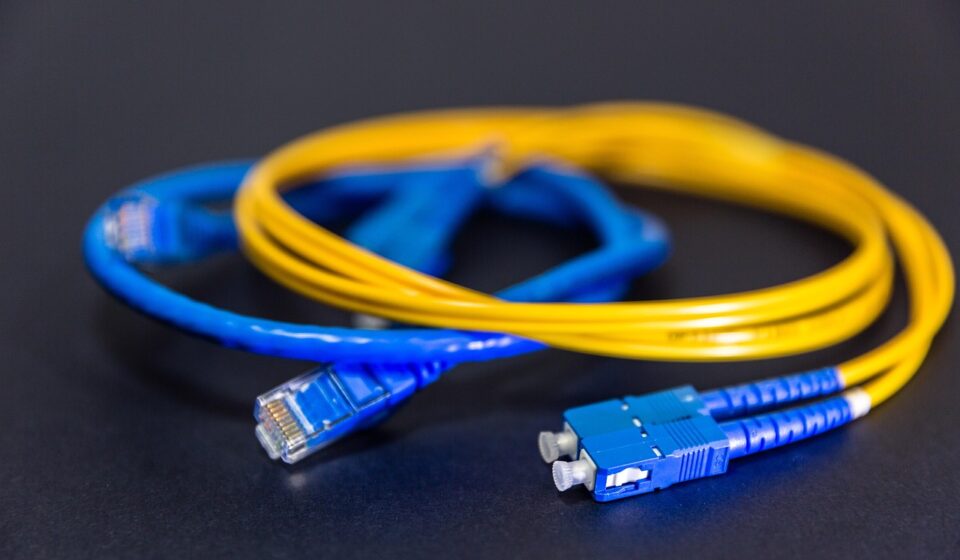
Optical fiber testing uses a different measurement logic. Instead of breaking force or elongation, laboratories often measure attenuation, insertion loss, return loss, continuity, splice quality, and the location of discontinuities. Typical equipment includes optical time-domain reflectometers, optical power meters, stabilized light sources, visual fault locators, optical spectrum analyzers, connector inspection microscopes, and cleaning tools.
IEC 60793-1-40:2019 is useful for planning because it separates attenuation measurement into multiple methods rather than implying one universal instrument. Cut-back testing, insertion loss measurement, backscattering analysis, and modeling spectral attenuation have different sample preparation demands and different roles in production, inspection, and troubleshooting. (webstore.iec.ch)
A practical comparison of equipment, properties, and selection notes
| Equipment type | Main measurement or task | Typical application | Selection notes |
|---|---|---|---|
| Single-fiber tensile tester | Breaking force, elongation, modulus-related values | Textile fibers, man-made fibers, research fibers | Check low-force resolution, gauge length control, fiber mounting method, grip pressure, and software calculations. |
| Yarn tensile tester | Breaking force, elongation, tenacity, toughness | Monofilament, multifilament, spun, plied, and cabled yarns | Match grips and pretension to the yarn structure; avoid comparing results from different specimen forms without method control. |
| Microscope and image tools | Fiber morphology, cross-section, surface defects | Fiber identification, damage analysis, blend investigation | Confirm magnification range, lighting, sample preparation tools, and image documentation requirements. |
| FTIR or thermal analysis instruments | Polymer identification, melting behavior, material verification | Synthetic fibers, blends, contamination checks | Use as part of a verified identification workflow rather than as a stand-alone answer for every blend. |
| Conditioning chamber or room | Controlled temperature and humidity before or during testing | Textile and moisture-sensitive fiber testing | Evaluate uniformity, recording capability, recovery after door opening, rack design, and sample throughput. |
| Optical time-domain reflectometer | Backscatter, event location, loss estimation, discontinuities | Optical fiber and cable inspection | Choose wavelength, dynamic range, event dead zone, launch cable practice, and reporting format for the network type. |
| Optical power meter and light source | Insertion loss and transmitted power | Installation verification, cable assembly checks, lab inspection | Check wavelength compatibility, connector interfaces, calibration interval, and stability of the source. |
Buying criteria that matter more than the brand name
A credible equipment specification should begin with methods and specimens, not a product photo. The first question is whether the instrument can support the exact standard, gauge length, pretension, speed, environment, calculation, and report format required. If a lab must compare results with suppliers, customers, or third-party labs, method compatibility is a business requirement, not a technical preference. See also: buying guides.
Next, evaluate measurement range and resolution. Fine fibers may require low-force measurement with stable noise performance. Strong technical fibers may require higher capacity and specialized gripping. Optical instruments must match wavelength, dynamic range, connector type, and expected link length. Oversized instruments can be as problematic as undersized ones if they cannot resolve the small differences that matter.
Sample handling also deserves early review. Many fiber tests fail before the measurement begins because the specimen is damaged, misaligned, contaminated, or poorly conditioned. Good equipment choices include the fixtures, tabs, clamps, cutters, templates, racks, cleaning tools, and environmental controls needed to prepare repeatable specimens.
Data integrity should be part of the same purchase discussion. Useful software should capture raw curves or traces, method parameters, specimen IDs, calibration status, operator information, and calculated results. For labs serving regulated, certified, or customer-audited work, export format, traceability, user access control, and revision history may be as important as the sensor itself.
Build the lab workflow before finalizing the purchase
Purchasing fiber testing equipment without a workflow often creates bottlenecks. A tensile tester may sit idle while specimens wait for conditioning. A microscope may be underused because sample preparation is slow. An optical time-domain reflectometer may generate inconsistent reports because launch conditions and connector cleaning are not standardized.
A basic workflow should define sample receipt, identification, conditioning or preconditioning, specimen preparation, instrument setup, calibration check, test execution, data review, result approval, and record storage. For each step, assign the equipment, consumables, method reference, responsible role, and acceptance criteria. This exercise often shows that a lower-cost accessory or environmental control upgrade can improve repeatability more than a more expensive main instrument.
Labs should also plan verification. Calibration certificates are necessary, but they do not replace day-to-day checks with known materials, control charts, inter-operator comparisons, and periodic review of failed or outlier tests. AATCC’s 2026 proficiency testing information, for example, includes fiber analysis and other textile performance areas, showing that external comparison remains an important tool for checking laboratory consistency. (aatcc.org)
Common mistakes when specifying fiber testing equipment
- Buying a universal machine without fiber-specific fixtures. A frame and load cell are only part of a tensile system. Fine fibers need suitable clamps, alignment, and specimen support.
- Ignoring conditioning requirements. For moisture-sensitive textiles, uncontrolled humidity can undermine otherwise careful measurements.
- Confusing fiber, yarn, and fabric methods. A result from a single fiber is not directly interchangeable with a yarn or fabric test result.
- Assuming optical and textile fiber tests overlap. They usually require different instruments, standards, skills, and reporting formats.
- Comparing supplier data without method details. Test speed, gauge length, pretension, sample state, and environment can change results.
- Underestimating consumables and maintenance. Grips, blades, tabs, cleaning supplies, connector adapters, calibration services, and reference materials should be part of the budget.
Frequently asked questions
What is the most important piece of fiber testing equipment for a new textile lab?
For many textile labs, a properly configured tensile testing system is the first major purchase because strength and elongation data are widely used in quality control and product development. The tester should still be specified together with grips, conditioning equipment, specimen preparation tools, and the relevant test methods.
Can one machine test single fibers, yarns, and fabrics?
Sometimes one universal testing frame can support all three, but only if it has the correct force range, fixtures, software methods, and specimen handling accessories. The standards and results are still different, so the lab should not treat single-fiber, yarn, and fabric data as interchangeable.
How is optical fiber testing equipment different from textile fiber testing equipment?
Optical fiber equipment measures light transmission behavior, such as attenuation, insertion loss, backscatter, and discontinuities. Textile fiber equipment usually measures mechanical, physical, chemical, or identification properties. The instruments, calibration practices, and operator skills are therefore different.
Should small labs buy advanced identification instruments immediately?
Not always. A small lab may begin with microscopy, verified reference materials, conditioning tools, and outsourced confirmatory analysis for complex blends. Advanced instruments such as FTIR or DSC become more valuable when the lab has enough sample volume, trained operators, and documented methods to use them consistently.
What should be included in a purchase specification?
A strong specification should list fiber type, specimen form, standards to be followed, measurement range, resolution, fixtures, environmental conditions, software outputs, calibration requirements, throughput, operator training, maintenance support, and consumables. This reduces the risk of buying equipment that looks suitable but cannot produce defensible results.