Lawn mowing tips for a healthier and easier-to-maintain yard
What good mowing really controls
The most useful lawn mowing tips are less about cutting the lawn short and more about managing turf stress. A sound mowing routine removes only a moderate amount of leaf tissue, keeps the mower blade sharp, avoids wet or unsafe conditions, and adjusts height as weather and growth change. University extension guidance commonly points to the one-third rule: avoid removing more than one-third of the grass blade in a single mowing. That simple rule helps homeowners decide when to mow based on growth, not on a fixed day of the week. It also helps reduce clumps, scalping, brown tips, and unnecessary cleanup. (yardandgarden.extension.iastate.edu)
For more routine yard and equipment care ideas, see the site’s maintenance tips section. The guidance below focuses on practical mowing decisions that can be checked in the yard before each cut.
Set mowing height before you think about frequency
Mowing height affects nearly every other mowing decision. Taller turf usually shades the soil better, supports deeper rooting, and can tolerate heat and short dry periods more effectively. Cutting too low can expose crowns, increase weed pressure in thin areas, and make a lawn look uneven because high and low spots become more obvious. The correct height depends on grass species, local climate, season, and lawn use, so the safest general approach is to stay within the recommended range for the turf type and avoid sudden height changes.
If you do not know the turf species, do not rely on color alone. Cool-season lawns, such as tall fescue, Kentucky bluegrass, or perennial ryegrass, are often managed higher than some warm-season grasses that tolerate lower mowing. That does not mean every southern lawn should be cut short. Local extension offices publish region-specific height ranges, and those ranges are more reliable than advice copied from another climate zone.
Use the one-third rule as a field calculation
The one-third rule is easy to apply. If the target mowing height is 3 inches, mow before the lawn reaches about 4.5 inches. If the target height is 4 inches, mow before the lawn reaches about 6 inches. Iowa State University Extension gives the 3-inch to 4.5-inch example as a simple way to show why mowing frequency changes with growth rate. (yardandgarden.extension.iastate.edu)
| Target height after mowing | Try to mow before grass reaches | Why it matters |
|---|---|---|
| 2 inches | About 3 inches | Useful only for turf types that tolerate shorter cutting |
| 3 inches | About 4.5 inches | A common target for many home lawns in moderate conditions |
| 4 inches | About 6 inches | Often helpful during heat, drought stress, or shade where appropriate |
This calculation also explains why weekly mowing is sometimes right and sometimes wrong. During rapid spring growth, a lawn may need mowing sooner than seven days. During hot, dry weather, the same lawn may grow slowly enough that mowing can wait. The calendar is only a reminder; grass height is the measurement that matters.
Mow at the right time and in the right conditions
Good timing reduces both turf damage and operator risk. Mow when the grass is dry enough for the blades to stand upright and for clippings to spread rather than mat. Wisconsin Horticulture Extension notes that wet turf can cause clippings to clump and can be dangerous for the operator, especially on wet slopes. (hort.extension.wisc.edu)
Dry mowing also gives a cleaner cut. When wet grass bends under the mower deck, the blade may tear some leaves, miss others, and leave streaks. Wet clippings can stick under the deck, restrict airflow, and turn a simple cut into a heavier cleanup job. If rain is expected, it is usually better to mow a little earlier, while still following the one-third rule, than to wait until the lawn is too tall and saturated.
Change direction to reduce ruts and lean
Repeatedly mowing the same path can press the soil and encourage grass to lean in one direction. Alternate the route when practical: north to south one mowing, east to west the next, then diagonal if the lawn shape allows it. The goal is not to create a striped professional finish every time. It is to distribute wheel traffic and help the mower lift grass from different angles.
Slow down in tall, dense, or uneven areas
A mower needs airflow to lift grass and discharge clippings. Moving too fast through dense growth can overload the deck, leave uncut strips, and create piles of clippings. In thick spring growth, it may be better to raise the deck and mow once, then return a day or two later at the target height rather than forcing one aggressive cut. That staged approach is especially useful after travel, rain delays, or equipment downtime.
Keep the mower blade sharp and the deck maintained
A sharp blade cuts grass cleanly. A dull blade tears it, leaving frayed tips that often turn tan or brown. Wisconsin Extension warns that dull blades tear rather than cut, while Purdue Extension notes that blades may need sharpening several times during the year, depending on lawn size, mowing frequency, and contact with sand, sticks, or debris. (hort.extension.wisc.edu)
Blade condition is one of the easiest mowing problems to diagnose. Look at the grass after mowing. Cleanly cut leaf tips suggest the blade is doing its job. Ragged fibers, a whitish cast across the lawn, or quick browning after mowing point to dullness or deck issues. Sharpening frequency should be based on cutting performance, not only on the calendar.
- Disconnect the spark plug wire or remove the battery before working near the blade.
- Use gloves when handling the blade, even when it looks dull.
- Balance the blade after sharpening to reduce vibration.
- Clean packed grass from the deck so airflow and discharge remain consistent.
- Replace cracked, bent, or heavily worn blades rather than trying to reuse them.
Gas, battery, and reel mowers all benefit from routine checks. Gas mowers need fuel, oil, filter, and spark plug maintenance according to the owner’s manual. Battery mowers need clean contacts, dry storage, and battery care within the manufacturer’s temperature limits. Reel mowers need proper blade-to-bedknife adjustment so they cut rather than bruise the turf.
Handle clippings as a resource, not automatic waste
Grass clippings are often treated as a cleanup problem, but short, dry clippings can return nutrients and organic matter to the lawn. Oregon State University Extension recommends leaving clippings when mowing regularly and removing no more than one-third of the blade. Kansas State University Extension also notes that clippings return a meaningful share of nutrients to the lawn. (extension.oregonstate.edu)
Clippings are most useful when they filter down into the turf canopy. They become a problem when they are long, wet, diseased, or left in heavy piles that block light. If clumps remain after mowing, spread them with a rake, mow again at a higher setting after they dry, or collect them for compost if appropriate. Do not leave thick piles on sidewalks, streets, or storm drains.
| Situation | Better choice | Reason |
|---|---|---|
| Short, dry clippings | Leave or mulch them | They break down quickly and reduce waste |
| Wet clumps | Break up, re-mow later, or collect | Clumps can smother grass and look messy |
| Seed heads or weeds present | Consider bagging problem areas | Collection can reduce visible spread in small patches |
| Disease symptoms are obvious | Avoid mowing wet turf and clean equipment | Moist clippings and dirty decks can move material around |
Mulching mowers are helpful because they cut clippings smaller, but they are not a substitute for proper timing. Even a good mulching mower will struggle if the lawn is too tall, wet, or dense. When in doubt, raise the deck, slow down, and cut more frequently until the lawn returns to a manageable height. See also: buying guides.
Make mowing safer before the engine starts
Lawn mowing is routine, which can make the risks easy to overlook. The U.S. Consumer Product Safety Commission identifies blade contact, mower instability, and thrown objects as important hazard scenarios for walk-behind power mowers. Its guidance also emphasizes keeping children away from operating equipment and not bypassing safety features. (cpsc.gov)
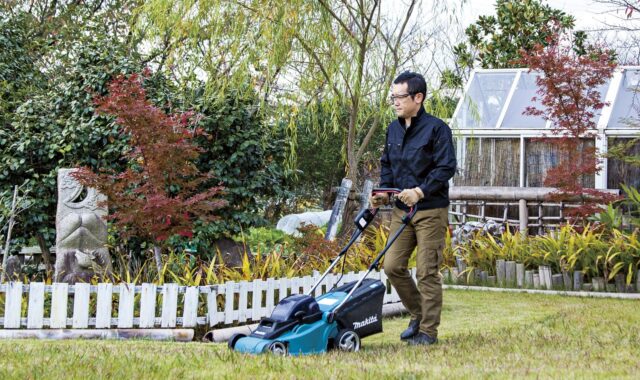
Before mowing, clear the lawn of stones, sticks, wire, toys, irrigation parts, pet items, and anything else that could be struck by the blade. Wear closed-toe shoes, eye protection, and hearing protection when appropriate. Keep children and pets indoors or well away from the mowing area. On slopes, use the pattern recommended for the mower type and avoid wet or unstable ground. If a slope feels unsafe, do not mow it with a standard mower.
- Never reach under the deck while the mower is running.
- Stop the blade before crossing gravel or clearing a blocked chute.
- Refuel gas equipment only after it has cooled and in a ventilated area.
- Do not pull a walk-behind mower backward unless the manual allows it and the path is clear.
- Store fuel, batteries, and chargers according to the manufacturer’s instructions.
Environmental maintenance matters too. The U.S. Environmental Protection Agency classifies small gasoline lawn and garden equipment as nonroad small spark-ignition engines and has issued emission standards for this equipment category. For a homeowner, the practical takeaway is straightforward: keep gas equipment tuned, avoid spilling fuel, and consider lower-emission options such as electric or reel mowers where they fit the lawn size and terrain. (epa.gov)
Adjust the routine by season and lawn stress
A single mowing routine rarely works all year. In spring, rapid growth may require more frequent mowing, but cutting height should still protect the plant. During summer heat or drought, mowing higher can reduce stress when the grass species and local recommendations allow it. If the lawn is dormant and not growing, mowing may be unnecessary except to manage weeds, seed heads, or uneven spots.
After heavy rain, wait until the soil can support mower traffic without rutting. After fertilization, follow product directions and avoid mowing immediately if granules need time to settle or irrigation is required. After overseeding, delay mowing until new seedlings are tall enough and rooted enough to tolerate light mowing with a sharp blade. After herbicide application, follow the label exactly; labels may specify when to mow before or after treatment.
When the lawn gets too tall
Do not scalp an overgrown lawn back to normal height in one pass. Raise the deck and remove only part of the growth. Wait a day or two if possible, then mow again at a slightly lower setting. This staged approach takes longer, but it reduces stress and avoids a heavy layer of clippings. It is also easier on the mower.
When the lawn looks brown after mowing
Brown color after mowing can come from drought stress, scalping, dull blades, disease, or cutting too much at once. Start with visible clues. Ragged tips suggest the blade needs sharpening. Brown high spots suggest the deck is too low for uneven ground. Widespread browning after a large height reduction suggests the one-third rule was exceeded. If irregular patches continue to expand, local extension disease guidance may be needed.
Frequently asked questions
How often should I mow my lawn?
Mow when the grass reaches the height that would require removing about one-third of the blade, not simply because a week has passed. Growth rate changes with season, rainfall, irrigation, fertilization, and grass type.
Is it better to mow high or low?
For many home lawns, mowing too low creates more problems than mowing slightly higher within the recommended range. However, the right height depends on the grass species and local climate. Use local extension height ranges when available.
Should I bag grass clippings every time?
No. Short, dry clippings can usually be left on the lawn. Bag or collect clippings when they are wet, clumped, diseased, full of weed seeds, or likely to wash onto hard surfaces.
Why does my lawn look torn after mowing?
Torn or shredded grass tips usually point to a dull or damaged blade, mowing when wet, or mowing too fast through dense growth. Sharpen the blade, clean the deck, and slow down before assuming the turf has a disease problem.
Can mowing help reduce weeds?
Mowing alone will not eliminate weeds, but correct height and frequency can help turf remain dense enough to compete. Scalping the lawn often has the opposite effect because it opens light and space for weed seedlings.
Practical mowing checklist
- Measure the lawn and mow before more than one-third of the blade would be removed.
- Set the deck height for the grass species, season, and stress level.
- Mow dry grass whenever possible.
- Clear debris before starting the mower.
- Keep people and pets away from the mowing area.
- Sharpen blades when cut tips look ragged.
- Leave short, dry clippings, but remove heavy clumps.
- Alternate mowing patterns to reduce ruts and grass lean.
- Slow down in thick growth and raise the deck if the mower bogs down.
- Follow the mower manual for maintenance, storage, batteries, fuel, and safety features.
Good mowing is a repeatable maintenance habit, not a one-time fix. When height, timing, blade condition, clipping management, and safety are handled together, the lawn usually looks cleaner and the work becomes easier to manage.