Grass maintenance tips for healthier turf through the seasons
Effective grass maintenance starts with observation, not a fixed calendar. Turf is easier to keep healthy when mowing height, irrigation, fertility, compaction relief, and pest control are adjusted to what the lawn is actually doing. University extension guidance generally points to the same principle: grass performs better when care matches the turf species, the season, soil structure, and local weather. For homeowners and facility managers, the objective is not maximum input. It is a dense, resilient stand of turf that uses water and fertilizer efficiently, tolerates normal traffic, and recovers from stress without unnecessary chemical applications.
For more practical upkeep topics, see the maintenance tips section.

Start by identifying the grass type and growth cycle
The first mistake in lawn care is treating every lawn as if it grows on the same schedule. Cool-season grasses and warm-season grasses respond differently to mowing, fertilizing, seeding, and drought stress.
Cool-season grasses, including tall fescue, Kentucky bluegrass, perennial ryegrass, and fine fescues, grow most actively in cooler weather. Their strongest growth is usually in spring and fall, while heat and drought can slow growth or trigger dormancy in summer. Warm-season grasses, including bermudagrass, zoysiagrass, centipedegrass, St. Augustinegrass, and bahiagrass, grow most actively during warmer months and commonly go dormant or slow down during cold weather.
This distinction matters because maintenance should support active growth rather than force growth during stress. Heavy nitrogen fertilization on a cool-season lawn during hot summer weather, for example, can increase disease pressure and mowing demand. Seeding a warm-season lawn too late in the year may leave new plants without enough warm growing time to establish.
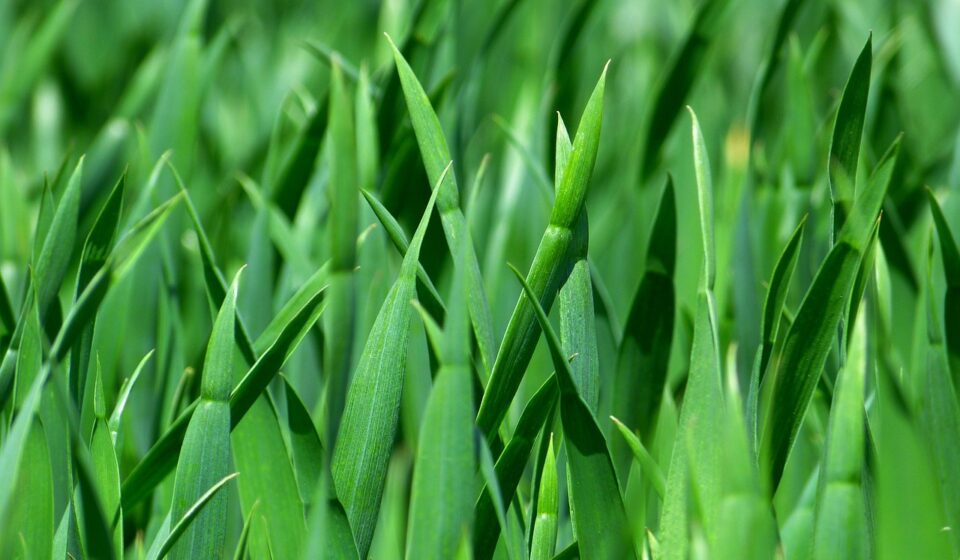
If you do not know the grass type, look at the blades, growth habit, and seasonal color changes. A local cooperative extension office can often help identify turf from clear photos or a sample. Once the grass type is known, maintenance decisions become more predictable.
Mow for plant health, not just appearance
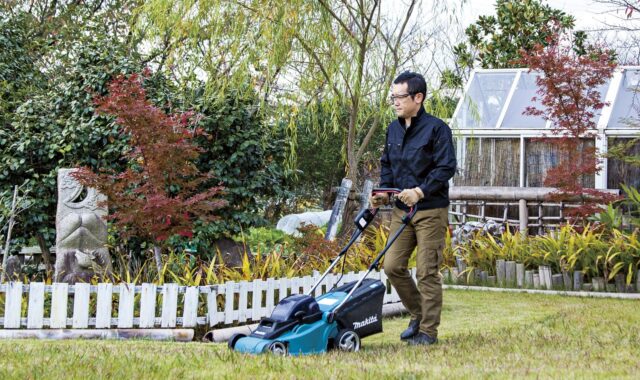
Mowing is the most frequent lawn maintenance task, and it directly affects root depth, shade tolerance, weed competition, and drought stress. A practical rule used by many turf specialists is to avoid removing more than one-third of the grass blade in a single mowing. Cutting too much at once shocks the plant, reduces photosynthetic leaf area, and can leave the turf more vulnerable to heat, weeds, and disease.
For most home lawns, a slightly taller mowing height is healthier than a very short cut. Taller turf shades the soil surface, helps reduce weed seed germination, and supports a deeper root system. Exact mowing height depends on the grass species and intended use, but repeatedly scalping a lawn is rarely a sound maintenance strategy.
Keep mower blades sharp
Dull blades tear grass instead of cutting it cleanly. Torn leaf tips lose moisture faster and often leave the lawn with a gray or brown cast after mowing. Sharpening or replacing blades during the growing season is a low-cost maintenance step that improves appearance without relying on fertilizer or pesticides.
Leave clippings when conditions allow
Grass clippings are not automatically a thatch problem. When mowing follows the one-third rule and clippings are not left in heavy clumps, they break down and return nutrients to the soil. Extension sources commonly note that returning clippings can reduce fertilizer needs because the clippings contain nitrogen and other nutrients. Bagging may still be useful when grass is excessively tall, wet, diseased, or forming mats that block light from the turf canopy.
Water deeply, then let the soil guide the next irrigation
Watering is where many lawns are either overmanaged or neglected at the wrong time. Frequent light watering encourages shallow rooting and may increase disease problems. A better approach is to water deeply enough to moisten the root zone, then wait until the lawn shows early signs of water need before irrigating again.
Many extension recommendations use about 1 inch of water per week as a general reference during dry periods, but that number is not universal. Soil texture, slope, thatch, compaction, rainfall, shade, temperature, wind, and grass type all change irrigation needs. Sandy soils dry faster. Clay or compacted soils may absorb water slowly and produce runoff if irrigation is applied too quickly. Shaded lawns may need less water than full-sun areas.
Use a simple catch-can test
A practical way to calibrate irrigation is to place several straight-sided cans across the sprinkler pattern and measure how long it takes to collect a known amount of water. This test shows whether the system is applying water evenly. Uneven sprinkler coverage often causes one area to stay wet while another turns brown, which can lead a manager to overwater the whole lawn.
Know when dormancy is acceptable
Some grasses naturally enter dormancy during heat, drought, or cold. Dormant turf may turn brown but can recover when favorable conditions return, provided the crown remains alive. If the lawn is not needed for heavy use and local watering restrictions apply, allowing controlled dormancy can be a reasonable strategy. Newly seeded or newly sodded lawns are different; they need more consistent moisture until roots are established.
Use soil testing before routine fertilizing
Fertilizer should correct a need, not compensate for poor mowing, watering, compaction, shade, or unsuitable grass selection. A laboratory soil test is one of the most useful steps in grass maintenance because it can show soil pH and levels of key nutrients such as phosphorus and potassium. Many soil tests also provide recommendations for lime and nutrient applications based on turf use and local soil conditions.
Nitrogen is usually the nutrient most associated with turf color and growth, but more nitrogen is not always better. Excess nitrogen can increase mowing frequency, contribute to soft growth, and worsen certain disease or environmental problems. Phosphorus and potassium applications should be based on soil test results, especially in regions with nutrient management rules designed to reduce runoff.
Environmental agencies warn that excess nutrients from fertilizers can move into stormwater and contribute to water-quality problems. Good fertilizer practice includes applying only the recommended amount, avoiding application before heavy rain, keeping fertilizer away from hard surfaces and waterways, and sweeping granules off sidewalks or driveways back onto the lawn.
Time fertilizer to active growth
Timing is as important as rate. Cool-season lawns generally respond better to most fertilization during fall and, where appropriate, lighter feeding in spring. Warm-season lawns are usually fertilized during their active warm-weather growth period. Local conditions and state rules vary, so regional extension guidance should always take priority over a generic national calendar.
Measure before you apply
For accurate application, know the lawn area in square feet, read the fertilizer analysis, and calibrate the spreader. Guessing often leads to striping, burned patches, wasted material, and uneven growth. A measured approach is especially important on sloped sites, near drainage inlets, and near ponds, streams, or other sensitive areas.
Relieve compaction and manage thatch only when needed
Compaction is a common hidden cause of thin turf. It reduces air movement, water infiltration, and root growth. Lawns with heavy foot traffic, parked equipment, clay soils, or construction disturbance are especially vulnerable. If a screwdriver or soil probe is difficult to push into moist soil, compaction may be part of the problem. See also: buying guides.
Core aeration removes small plugs of soil and is generally more useful for compaction than spike tools that simply press holes into the ground. The best timing is usually during active growth, when the grass can recover. For cool-season lawns, that often means early fall or spring. For warm-season lawns, aeration is commonly timed during late spring or early summer growth, after the turf has fully greened up.
Thatch is a layer of living and dead stems, roots, and organic material between the green leaves and the soil surface. A small amount can be normal, but excessive thatch can restrict movement of water, air, nutrients, and pesticides into the soil. Dethatching should not be treated as an annual ritual for every lawn. It is disruptive and should be used only when the thatch layer is actually excessive and the turf species can recover.
| Problem observed | Likely issue | Maintenance response |
|---|---|---|
| Water runs off before soaking in | Compaction, slope, heavy clay, or excessive thatch | Use cycle-and-soak irrigation, consider core aeration, and inspect thatch depth |
| Thin turf in high-traffic paths | Soil compaction and wear | Aerate during active growth, redirect traffic, and overseed if suitable |
| Brown tips after mowing | Dull mower blade or mowing during stress | Sharpen blades and avoid removing more than one-third of the blade |
| Fast green growth followed by weakness | Excess nitrogen or poor timing | Base fertilizer on soil test and grass growth cycle |
| Patchy weeds in open areas | Thin turf, low mowing, bare soil, or unsuitable grass | Improve mowing height, overseed, correct soil issues, and identify weeds before treatment |
Overseed thin areas before weeds take over
A dense lawn is one of the most effective weed-management tools. Bare soil gives weed seeds light and space to establish. Overseeding helps fill thin areas, improves turf density, and can introduce improved cultivars when the existing stand is weak or poorly adapted.
Timing depends on grass type. Cool-season lawns are often overseeded in late summer to early fall because soil is still warm, air temperatures are moderating, and weed competition is lower than in spring. Warm-season grasses are usually seeded, sprigged, plugged, or sodded during warm active growth periods. Spring seeding of cool-season lawns can work in some situations, but seedlings may face summer heat before roots are mature.
Good seed-to-soil contact is essential. Mowing lower than usual immediately before overseeding, removing loose debris, aerating compacted areas, and lightly topdressing where appropriate can improve establishment. After seeding, moisture management changes temporarily. New seed needs frequent light moisture until germination, followed by a gradual transition to deeper, less frequent watering as roots develop.
Control weeds and pests with identification first
Weeds, insects, and diseases are symptoms as well as problems. A lawn with poor drainage, compacted soil, wrong mowing height, excess nitrogen, or too much shade will keep inviting problems even after treatment. Integrated Pest Management, often shortened to IPM, begins with monitoring, correct identification, tolerance thresholds, and choosing the lowest-risk effective control.
Before using herbicides, insecticides, or fungicides, identify the target. Broadleaf weeds, grassy weeds, annual weeds, perennial weeds, insects, and fungal diseases require different responses. A product that works on one issue may be ineffective or inappropriate for another.
When pesticides are used, the label is the controlling document. U.S. pesticide regulators and university IPM programs emphasize reading the entire label before purchase and application. The label explains the active ingredient, target pests, application rate, safety instructions, timing, reentry guidance, and disposal requirements. More product than the label allows is not better lawn care; it is unsafe and unlawful.
Fix the conditions that favor the problem
Prevention often outperforms repeated treatment. Mow at the correct height, reduce irrigation that keeps leaves wet overnight, improve drainage, seed bare areas, and avoid unnecessary nitrogen surges. These steps will not eliminate every weed or pest, but they reduce the pressure that makes chemical control seem constantly necessary.
Build a seasonal grass maintenance checklist
A seasonal checklist is useful, but it should remain flexible. Weather, rainfall, drought, soil temperature, traffic, and local regulations can shift the right timing by weeks. Use the following framework as a planning tool rather than a rigid schedule.
Spring
- Inspect winter damage, bare spots, drainage issues, and compacted areas.
- Begin mowing when grass resumes active growth, following the one-third rule.
- Test soil if recent results are not available.
- Use spring fertilizer carefully, especially on cool-season lawns that will soon face summer stress.
- Identify weeds before applying any control product.
Summer
- Raise mowing height where appropriate to reduce heat and drought stress.
- Water deeply when needed, while respecting local restrictions.
- Avoid aggressive renovation during extreme heat.
- Watch for insect or disease symptoms, but confirm the cause before treatment.
- Limit nitrogen on heat-stressed cool-season turf unless local guidance recommends otherwise.
Fall
- Overseed cool-season lawns where turf is thin.
- Core aerate compacted cool-season lawns during active recovery weather.
- Apply fertilizer according to soil test guidance and grass type.
- Continue mowing until growth stops.
- Remove heavy leaf cover so turf is not smothered.
Winter or dormant season
- Keep heavy traffic off frozen, saturated, or dormant turf where possible.
- Service mowers, irrigation parts, spreaders, and measuring tools.
- Review soil test results and plan next season’s maintenance.
- Consider lawn alternatives in areas where turf repeatedly fails because of deep shade, erosion, or constant traffic.
Frequently asked questions
How often should grass be mowed?
Mow according to growth rate, not a fixed weekly habit. During rapid growth, a lawn may need mowing more than once per week. During drought, heat, cold, or dormancy, it may need little or no mowing. The key is to avoid removing more than one-third of the grass blade at one time.
Is it better to water grass every day or once a week?
Established turf usually performs better with deep, less frequent watering than with daily light watering. Daily watering may be appropriate for newly seeded areas during germination, but established lawns should be watered based on soil moisture, weather, and early signs of stress.
Should grass clippings be bagged?
In most normal mowing conditions, clippings can remain on the lawn. They decompose and return nutrients. Bagging is useful when clippings are too long, wet, diseased, or clumped heavily enough to shade the grass.
When is the right time to aerate a lawn?
Aerate when the grass is actively growing and able to recover. Cool-season lawns are commonly aerated in early fall or spring. Warm-season lawns are commonly aerated during late spring or early summer active growth. Avoid aerating during drought or severe heat stress.
Do all lawns need fertilizer every year?
Not necessarily. Fertilizer needs depend on grass type, soil test results, clippings management, rainfall or irrigation, use level, and performance expectations. A soil test is the most reliable starting point for deciding whether lime, phosphorus, potassium, or other adjustments are needed.
The practical takeaway
The most reliable grass maintenance tips are measured, seasonal, and site-specific. Identify the grass type, mow high enough for plant health, water deeply only when needed, fertilize from soil test information, aerate compacted soil during active growth, overseed thin areas at the right time, and use pest controls only after proper identification. This approach reduces wasted inputs while giving the lawn a stronger chance to stay dense, functional, and resilient through changing weather.