Lab safety equipment list for chemical, biological and general labs
A practical lab safety equipment list starts with the hazards present in the room: chemicals, biological materials, sharps, heat, pressure, compressed gases, electrical equipment and emergency scenarios. In most laboratories, the core list includes eye and face protection, lab coats or other protective clothing, task-appropriate gloves, respiratory protection when required, emergency eyewash and shower access, chemical fume hoods or biological safety cabinets, spill supplies, fire protection, first aid materials, safety signage, labels and waste containers. OSHA, CDC, NIH, NFPA and the National Research Council all point to the same basic principle: equipment works only when it is selected through risk assessment, maintained, inspected and used with proper training. For more safety topics, visit the lab safety section.
How to build a lab safety equipment list from hazards
A lab safety checklist is most useful when it follows the hierarchy of controls. Engineering controls such as fume hoods, biosafety cabinets, machine guards and local exhaust should come before reliance on personal protective equipment. Administrative controls, standard operating procedures and training should support those engineering controls. PPE then becomes the final layer of protection for the worker, not the primary control.
In the United States, OSHA’s Laboratory standard, 29 CFR 1910.1450, addresses occupational exposure to hazardous chemicals in laboratories. It requires a Chemical Hygiene Plan for covered laboratories and expects the plan to address standard operating procedures, control measures, protective equipment and measures that ensure fume hoods and other protective equipment function properly. OSHA’s general PPE standard, 29 CFR 1910.132, also requires employers to assess the workplace for hazards that require PPE and select equipment that protects affected workers.
As a result, there is no single universal list that fits every laboratory. A school chemistry room, hospital diagnostic lab, petroleum testing lab and materials research lab may share many items, but each one needs equipment matched to its hazards, quantities, procedures and emergency response plan.
Core PPE for most laboratory work
PPE is often the first category people think of when they search for a lab safety equipment list. It is important, but it should be specified by task rather than purchased as a generic kit.
- Safety glasses: Basic eye protection for impact risks and general laboratory presence where splash risk is low.
- Chemical splash goggles: More appropriate than standard safety glasses when handling corrosives, irritating liquids, hazardous solutions, pressurized glassware or splash-prone operations.
- Face shields: Used with goggles or safety glasses for higher splash, pressure, thermal or fragmentation risks. A face shield does not replace sealed eye protection when liquid splash is possible.
- Lab coats and protective clothing: Selected for the work, such as flame-resistant coats for pyrophoric or flammable hazards, fluid-resistant garments for biological or clinical work, and disposable protection for contamination control.
- Gloves: Chosen by chemical compatibility, biological risk, cut risk, temperature and dexterity requirements. Thin disposable gloves are common, but they are not suitable for every solvent, toxic chemical or high-contact task.
- Respiratory protection: Used only when required by a hazard assessment and respiratory protection program. Respirators are not a substitute for proper ventilation when engineering controls are feasible.
- Hearing, thermal and cut protection: Added for sonicators, cryogenic materials, ovens, autoclaves, dry ice, sharp tools, glass handling or high-noise equipment.
The National Research Council’s Prudent Practices in the Laboratory emphasizes that eye protection, glove selection and protective clothing must be compatible with the hazard. It also cautions that common disposable gloves may be inadequate for some toxic chemicals and solvents. For this reason, glove charts, safety data sheets and institutional procedures should be part of the equipment selection process.
Emergency equipment every lab should evaluate
Emergency equipment is not optional background hardware. It must be accessible, visible, unobstructed and tested at defined intervals under the applicable workplace, building and consensus standards.
| Equipment | Main purpose | Selection notes |
|---|---|---|
| Emergency eyewash | Flush eyes after exposure to corrosive or injurious materials | Required where eyes may be exposed to injurious corrosive materials under OSHA 29 CFR 1910.151(c); ANSI/ISEA Z358.1 is commonly used for detailed installation and performance guidance. |
| Safety shower | Drench the body after chemical splash or spill exposure | Needed where body exposure is credible. Access should be clear, fast and not blocked by doors, stored supplies or equipment. |
| First aid kit | Support immediate response to minor injuries | Contents should reflect the laboratory’s hazards and be checked for expired or missing supplies. |
| Spill kit | Control small spills when workers are trained and it is safe to do so | Match absorbents and neutralizers to acids, bases, solvents, oils, mercury or biological materials as applicable. |
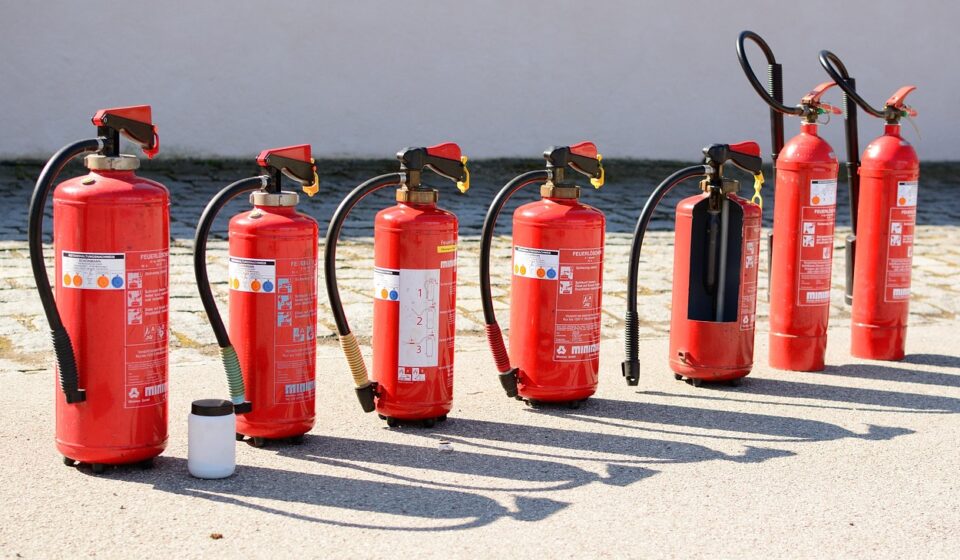
| Fire extinguisher | Initial response to suitable incipient fires | Type, placement and training should follow facility fire protection requirements and local code expectations. |
| Emergency alarm or phone access | Contact emergency responders quickly | Post emergency numbers and location information where users can see them during an incident. |
OSHA’s medical and first aid rule requires suitable quick drenching or flushing facilities where employees may be exposed to injurious corrosive materials. OSHA has also stated in interpretation guidance that ANSI/ISEA Z358.1 provides detailed information on emergency eyewash and shower installation and operation. For laboratories using chemicals, NFPA 45 is a key fire protection reference for laboratory design and operation, while local fire codes and institutional fire safety programs determine the exact extinguisher and alarm requirements.
Ventilation and containment equipment
Ventilation and containment equipment often provides more protection than PPE because it controls the hazard before it reaches the worker’s breathing zone or skin. The correct equipment depends on whether the lab handles chemical vapors, powders, biological aerosols, nanoparticles, radioactive materials or mixed hazards.
- Chemical fume hoods: Used for hazardous chemical vapors, gases, aerosols and procedures with inhalation risk. Sash position, airflow performance, clutter control and annual or periodic verification are essential.
- Biological safety cabinets: Used for infectious or potentially infectious biological materials when aerosol or splash generation is possible. CDC and NIH biosafety guidance describes BSCs as primary containment equipment for biological work.
- Local exhaust arms and snorkels: Useful for capturing emissions from specific instruments or low-volume sources, provided airflow is validated for the task.
- Glove boxes or sealed enclosures: Used for oxygen-sensitive, moisture-sensitive, toxic, radioactive or highly hazardous materials requiring a controlled barrier.
- Autoclaves and decontamination systems: Important for biological waste and reusable materials when validated cycles and waste procedures are in place.
A common error is treating any ventilated cabinet as interchangeable. A chemical fume hood is not a biological safety cabinet, and a clean bench is not a worker-protection device for hazardous biological materials. Equipment names should be matched to the hazard, airflow direction, filtration method and intended protection goal.
Chemical, biological and physical hazard supplies
Beyond PPE and emergency fixtures, laboratories need support equipment that keeps routine work from turning into an incident. These items may look ordinary, but they are central to daily safe operation.
Chemical safety supplies
- Clearly labeled primary and secondary chemical containers
- Safety data sheet access for hazardous chemicals
- Compatible chemical storage cabinets for flammables, corrosives or toxics
- Secondary containment trays for liquids
- Waste containers compatible with the waste stream
- Grounding and bonding equipment where flammable liquid transfer creates static risk
- Gas cylinder restraints, caps, carts and compatible regulators
OSHA’s Hazard Communication standard requires chemical hazard information to be communicated through labels, safety data sheets and training. For a practical equipment list, this means labels, SDS access, signs and container management tools belong beside goggles and gloves.
Biological safety supplies
- Biohazard labels and access signage where applicable
- Sharps containers that resist puncture and leakage
- Disinfectants selected for the organism and surface
- Autoclave bags, trays and indicator materials when autoclaving is used
- Sealed rotors, safety cups or containment devices for centrifugation
- PPE such as gloves, protective clothing, face protection and respiratory protection when the risk assessment requires it
CDC and NIH’s Biosafety in Microbiological and Biomedical Laboratories describes containment as a combination of practices, safety equipment and facility safeguards. That framing is useful because it avoids the mistake of assuming that a biosafety cabinet alone makes a biological procedure safe. See also: buying guides.
Physical and instrument-related protection
- Machine guards and interlocks for moving parts
- Shielding for vacuum, pressure or reaction hazards
- Heat-resistant gloves and tongs for hot equipment
- Cryogenic gloves, face protection and ventilation review for liquid nitrogen or dry ice work
- Electrical safety devices, lockout materials and dry work surfaces where appropriate
- Laser safety eyewear and warning signs when lasers are present
Physical hazards are sometimes underestimated in chemistry and biology spaces. Broken glass, centrifuge failures, compressed gas releases, burns and ergonomic strain can injure workers even when chemical exposure is well controlled.
A practical checklist by lab type
The following checklist is a starting point for selecting equipment. It should be reviewed against the laboratory’s Chemical Hygiene Plan, biosafety manual, safety data sheets, equipment manuals, institutional policy and local regulatory requirements.
| Lab type | Priority safety equipment | Key caution |
|---|---|---|
| General teaching lab | Safety glasses or goggles, lab coats or aprons, gloves, eyewash, shower access, spill supplies, first aid kit, labeled waste containers | Student turnover makes training, signage and supervision as important as equipment. |
| Chemical research lab | Chemical fume hoods, compatible gloves, splash goggles, face shields, flammable and corrosive storage, emergency shower, eyewash, spill kits, fire protection | Glove and storage compatibility must be checked for each chemical class. |
| Clinical or diagnostic lab | Gloves, protective clothing, eye and face protection, sharps containers, biological safety cabinets where aerosols may be generated, disinfectants, biohazard waste supplies | Bloodborne pathogen and biosafety procedures may apply depending on specimens and tasks. |
| Microbiology lab | Biosafety cabinet as required, autoclave or validated decontamination, biohazard labels, PPE, disinfectants, sealed centrifuge containment, handwashing facilities | Biosafety level and agent-specific risk assessment drive equipment selection. |
| Materials or petroleum testing lab | Ventilation, flame-resistant or chemical-resistant PPE as needed, heat protection, spill kits, grounding and bonding, gas cylinder restraints, fire protection | Flammability, pressure, temperature and solvent exposure may be more important than biological risks. |
Inspection and maintenance items to include
A list is incomplete if it does not include inspection and maintenance. Equipment that is blocked, expired, uncertified, incompatible or untested can create a false sense of security.
- Check eyewash and shower access routes for obstruction.
- Verify fume hood airflow indicators and keep sashes at safe operating positions.
- Confirm biological safety cabinet certification according to institutional policy and applicable biosafety requirements.
- Inspect gloves, goggles, face shields and coats for damage or contamination.
- Review spill kit contents after use and at scheduled intervals.
- Check fire extinguisher inspection tags and report missing or discharged units.
- Confirm safety labels remain legible on containers, waste bottles, gas cylinders and storage areas.
- Remove expired first aid supplies and incompatible chemical waste containers.
For an editorial or purchasing checklist, it is useful to separate items into three columns: must have before work begins, task-specific additions and inspection frequency. This format helps avoid overbuying generic PPE while missing critical emergency or containment equipment.
Frequently asked questions
What is the most important lab safety equipment?
The most important equipment depends on the hazard. For corrosive liquid work, eyewash and shower access may be critical. For volatile toxic chemicals, a functioning fume hood may be more important than extra PPE. For infectious aerosols, a properly selected biological safety cabinet may be essential. A hazard assessment should set the priority.
Are safety glasses enough in a laboratory?
Not always. Safety glasses help with impact protection and some general risks, but chemical splash goggles are usually more appropriate for liquid splash hazards. Face shields can add protection for the face and neck, but they should normally be worn with goggles or safety glasses, not instead of them.
Does every lab need a fume hood?
No. A fume hood is needed when procedures can release hazardous chemical vapors, gases, aerosols or dusts that require local exhaust. Some low-hazard teaching or instrument rooms may not need one, while chemical research labs often rely on them heavily. The decision should come from the chemical inventory and procedures.
What should be in a laboratory spill kit?
A spill kit may include absorbents, neutralizers, disposable PPE, waste bags, labels, scoops and instructions, but the contents must match the materials used in the lab. Acid, solvent, oil, mercury and biological spills require different supplies and different cleanup rules.
How often should a lab safety equipment list be reviewed?
Review the list whenever new chemicals, organisms, instruments or procedures are introduced, and during scheduled safety inspections. A good annual review is helpful, but it should not replace updates triggered by changes in actual laboratory work.
Bottom line
A good lab safety equipment list is not a catalog of random protective products. It is a risk-based map that connects each hazard to a control: ventilation for airborne chemicals, biological safety cabinets for infectious aerosols, eyewashes and showers for corrosive exposure, compatible PPE for task-level protection, and labels, storage and waste systems for daily control. The safest list is specific to the laboratory, supported by training and kept current through inspection.