Lab instruments list for modern laboratories and what each tool does

What belongs on a lab instruments list?
A useful lab instruments list is not just a catalogue of devices. It is a functional map of the tools a laboratory needs to measure, prepare, contain, heat, cool, observe, store, and document samples safely. The right list depends on methods, hazards, sample types, throughput, and quality requirements. A teaching lab, a microbiology lab, an analytical chemistry lab, and an industrial quality control lab may share balances, pipettes, glassware, and temperature devices, but they will not use the same containment, calibration, or sample preparation setup. This guide groups common instruments by purpose so readers can build a clearer checklist before purchasing, upgrading, or auditing equipment. For related equipment explainers, visit the lab instruments category.
It also helps to separate three overlapping terms before building the list. Laboratory instruments usually refers to devices that produce measurements, control conditions, process samples, or support experimental methods. Laboratory equipment is broader and may include benches, cabinets, utilities, and safety systems. Laboratory supplies are usually consumables such as tips, tubes, gloves, filters, reagents, and labels. In real planning, all three matter, but instruments need special attention because they often affect data quality, user safety, maintenance cost, and compliance obligations.

Quick reference lab instruments list by function
The table below is a structured starting point. It is grouped by function rather than by department because the same instrument may be used in many types of laboratories.
| Function | Common instruments | Main use | Selection notes |
|---|---|---|---|
| Measurement | Analytical balance, top-loading balance, pH meter, conductivity meter, thermometer, spectrophotometer | Quantify mass, acidity, conductivity, temperature, or optical response | Check accuracy, range, readability, calibration needs, and sample compatibility |
| Liquid handling | Micropipette, serological pipette, burette, dispenser, dilutor | Transfer precise liquid volumes | Match volume range, tip compatibility, chemical resistance, and calibration program |
| Sample preparation | Centrifuge, vortex mixer, homogenizer, grinder, filtration unit, sonicator | Separate, mix, disrupt, clarify, or concentrate samples | Consider sample size, containment, rotor safety, heat generation, and cleaning |
| Thermal control | Hot plate, heating mantle, drying oven, incubator, water bath, furnace | Heat, dry, incubate, digest, or condition samples | Review temperature range, uniformity, stability, ventilation, and over-temperature protection |
| Cold storage | Laboratory refrigerator, freezer, ultra-low freezer, cryogenic storage system | Preserve reagents, standards, specimens, and temperature-sensitive materials | Use monitoring, alarms, backup plans, and proper segregation for hazardous materials |
| Containment and safety | Chemical fume hood, biological safety cabinet, laminar flow cabinet, eyewash, safety shower | Reduce exposure to chemical, biological, or particulate hazards | Select based on the hazard; airflow devices are not interchangeable |
| Observation and analysis | Microscope, colony counter, chromatograph, electrophoresis unit, thermal cycler | Inspect, identify, separate, amplify, or analyze samples | Choose according to method requirements, detection limits, software, and service support |
| Cleaning and sterilization | Autoclave, glassware washer, ultrasonic cleaner, sterilizer | Clean, decontaminate, or sterilize tools and media | Confirm load type, cycle validation needs, utilities, and maintenance access |
Core measuring and sample preparation instruments
Balances and weighing instruments
Balances are among the most widely used laboratory instruments because mass measurement underpins solution preparation, formulation, sample intake, and quality checks. Analytical balances are used where higher readability is required. Top-loading balances are better suited to routine weighing where extreme sensitivity is not necessary. Drafts, vibration, static electricity, temperature changes, and poor leveling can all affect weighing performance, so the balance location can be as important as the balance specification.
For laboratories that rely on traceable measurement, calibration and routine checks should be planned before the balance is placed into service. NIST publications on calibration and metrology emphasize traceability and uncertainty as core concepts in measurement quality. In practical terms, a lab should know what the balance is used for, what tolerance is acceptable, which weights or service provider support the calibration program, and how failed checks are handled.
Pipettes and liquid handling tools
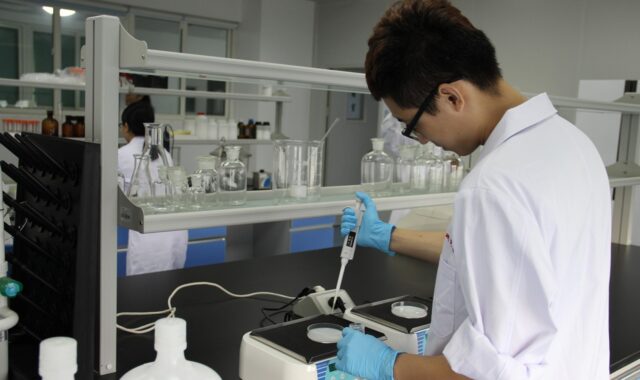
Pipettes, dispensers, burettes, and automated liquid handlers control one of the most common sources of laboratory variability: volume transfer. A micropipette that feels comfortable but is used outside its ideal range can still produce poor data. A pipette used for volatile solvents, viscous liquids, acids, biological samples, or repeated high-throughput work may require different tips, materials, cleaning procedures, and service intervals.
Good liquid handling planning starts with volume range, required precision, sample type, operator workload, and contamination risk. For regulated or quality-sensitive work, pipettes should be identified individually and tied to verification or calibration records. Even in a small laboratory, labeling instruments and removing questionable pipettes from use can prevent a small error from becoming a repeated method problem.
Centrifuges, mixers, and homogenizers
Centrifuges separate materials by density and are used in clinical, biological, chemical, environmental, and industrial labs. Key specifications include maximum speed, relative centrifugal force, rotor type, tube compatibility, temperature control, and sealing options. The safety issue is not only speed; rotor condition, correct balancing, compatible tubes, and lid interlocks all matter. CDC and NIH biosafety guidance highlights centrifuge safety cups and sealed rotors as examples of safety equipment used to reduce exposure to aerosols and droplets in biological work.
Mixers, shakers, vortexers, homogenizers, mills, and sonicators are sample preparation tools, not just accessories. They influence extraction efficiency, particle size, temperature rise, sample loss, and cross-contamination. When adding these instruments to a list, describe the sample type and expected result, not only the device name.
Thermal, storage, and environmental control instruments
Many laboratory methods depend on controlled temperature. Ovens dry glassware or samples, incubators maintain biological or chemical conditions, furnaces provide high-temperature treatment, water baths transfer heat evenly, and hot plates or heating mantles support controlled heating during preparation. A useful lab instruments list should include the required temperature range, stability, uniformity, chamber size, atmosphere, and safety controls, rather than only the instrument category.
Cold storage also needs more detail than a label such as refrigerator or freezer. Reagents, standards, vaccines, enzymes, specimens, and volatile chemicals may have very different storage requirements. A general-purpose refrigerator is not automatically suitable for flammable materials, biological specimens, or highly temperature-sensitive standards. Temperature mapping, alarms, backup power, access control, and inventory discipline can be just as important as the cold unit itself.
Environmental control instruments may include humidity chambers, stability chambers, clean benches, glove boxes, desiccators, and environmental monitors. These tools are often selected because a method requires a defined atmosphere, moisture level, particle condition, or contamination boundary. If the condition affects results, the instrument should be treated as part of the measurement system, not as background furniture.
Safety and containment instruments are not optional add-ons
Safety equipment should appear early in any laboratory planning document because it determines which work can be performed responsibly. In the United States, OSHA’s Laboratory Standard requires a Chemical Hygiene Plan for workplace use of hazardous chemicals in laboratories, and that plan includes procedures, equipment, personal protective equipment, and work practices. OSHA also addresses the need for fume hoods and other protective equipment to function properly. For that reason, a chemical lab instruments list should not treat fume hoods, spill control, eyewash stations, and safety showers as afterthoughts.
Chemical fume hoods, biological safety cabinets, laminar flow clean benches, and glove boxes are often confused, but they serve different purposes. A fume hood is designed primarily to help protect users from hazardous chemical vapors or aerosols when it is correctly selected and operated. A biological safety cabinet is a primary containment device for work with infectious microorganisms or other biological hazards; CDC and NIH biosafety guidance treats BSC selection, installation, and use as part of a broader biosafety program. A laminar flow clean bench may protect materials from contamination, but it is not a substitute for personnel protection when hazardous agents are involved.
Personal protective equipment such as gloves, coats, eye protection, face shields, and respirators is important, but PPE should not be the only control when engineering controls are required. A stronger equipment list follows the hierarchy of controls: eliminate or substitute hazards when possible, use engineering controls such as ventilation and containment, apply safe work practices, and then specify PPE that matches the residual risk. See also: buying guides.
How the list changes by laboratory type
Teaching and general science laboratories
Teaching labs usually need durable, easy-to-maintain instruments that support repeated demonstrations and student practice. Common items include balances, microscopes, hot plates, water baths, pH meters, glassware, basic centrifuges, timers, thermometers, and safety equipment. The main planning issues are supervision, ruggedness, clear labeling, storage, and safe operating procedures.
Analytical chemistry laboratories
Analytical chemistry labs may require higher-performance instruments such as UV-Vis spectrophotometers, chromatography systems, titrators, conductivity meters, digestion systems, filtration units, analytical balances, and certified reference material storage. In this setting, the list must connect each instrument to method performance, detection limits, calibration, sample preparation, and data handling. A low-cost instrument can become expensive if it cannot meet the method requirement or lacks reliable service support.
Microbiology and biotechnology laboratories
Microbiology and biotechnology laboratories typically add incubators, autoclaves, biosafety cabinets, centrifuges with sealed rotors, microscopes, colony counters, refrigerators, freezers, thermal cyclers, electrophoresis systems, and sterile liquid handling tools. Contamination control and biosafety are central planning concerns. The correct cabinet, workflow, sterilization method, and waste process must be matched to the organisms and materials being handled.
Clinical, diagnostic, and quality control laboratories
Clinical and industrial quality control labs often place stronger emphasis on throughput, documentation, equipment qualification, maintenance records, and downtime planning. Instruments may include analyzers, centrifuges, incubators, refrigerators, balances, microscopes, spectrometers, chromatography systems, and barcode or sample tracking tools. ISO/IEC 17025:2017, which remains the current edition after ISO review and confirmation in 2023, is a common reference point for testing and calibration laboratories that need to demonstrate competent and consistent operation.
Maintenance, calibration, and documentation checks
A lab instruments list becomes much more useful when it includes lifecycle details. For each instrument, record the intended use, required range, acceptance criteria, location, utilities, software needs, maintenance tasks, calibration or verification schedule, responsible owner, and critical spare parts. This turns the list from a purchasing document into an operating control.
Important questions to ask before adding any instrument include:
- What method or workflow requires this instrument?
- Which measurement range, sensitivity, capacity, and environmental conditions are needed?
- Does the instrument require calibration, verification, qualification, or routine performance checks?
- Who is trained to operate, clean, troubleshoot, and approve the instrument for use?
- What happens to samples and data if the instrument fails?
- Are utilities, ventilation, bench strength, drainage, gases, electrical supply, and space adequate?
- Are service contracts, spare parts, consumables, and software support available for the expected life of the instrument?
Calibration frequency should not be copied blindly from another laboratory. It should be based on manufacturer instructions, method requirements, risk, past performance, regulatory expectations, and how often the instrument is used. Some tools need daily checks, some need checks before each critical use, and others may follow a scheduled external calibration program. The central rule is simple: if an instrument can influence reported results or safety, its status should be known before it is used.
Frequently asked questions
What are the most common lab instruments?
Common instruments include balances, pipettes, microscopes, centrifuges, pH meters, hot plates, incubators, ovens, refrigerators, freezers, water baths, spectrophotometers, fume hoods, and biological safety cabinets. The exact list depends on the lab’s work, hazards, and quality requirements.
What is the difference between laboratory equipment and laboratory instruments?
Laboratory equipment is the broader category. It can include instruments, furniture, storage systems, utilities, and safety installations. Laboratory instruments usually refers to devices that measure, process, observe, control, or analyze samples.
How should a new lab build its first equipment list?
Start with the methods the lab must perform, then list the measurements, sample preparation steps, containment needs, temperature conditions, storage requirements, and documentation obligations. After that, assign specifications, safety controls, calibration needs, and maintenance responsibilities to each instrument.
How often should lab instruments be calibrated?
There is no universal interval for every instrument. Calibration or verification frequency should be based on risk, use frequency, manufacturer guidance, method tolerance, historical performance, and applicable quality or regulatory requirements. Critical instruments should also have clear rules for out-of-tolerance results.
Are fume hoods and biological safety cabinets interchangeable?
No. A chemical fume hood and a biological safety cabinet are designed for different hazards and airflow purposes. Selection should be based on the material being handled, the type of protection required, and relevant safety guidance. Using the wrong containment device can create a false sense of protection.