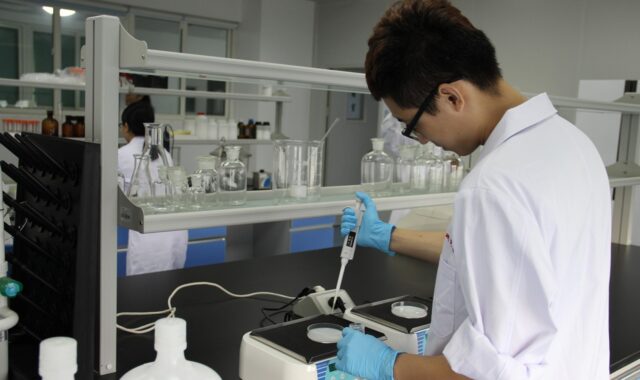
How to choose lab analytical instruments for reliable testing workflows

Lab analytical instruments support decisions in research, quality control, environmental testing, materials analysis, pharmaceutical development, food safety, and many other laboratory settings. A sound purchase decision starts with the test method and the decision the data must support, not with the instrument model alone. The practical question is whether the instrument can deliver reliable results under the laboratory’s actual sample load, operator skill level, documentation requirements, and maintenance capacity. This article explains how to evaluate lab analytical instruments through a lifecycle view that covers method fit, performance specifications, qualification, data handling, service planning, and long-term usability.
Start with the analytical question, not the catalog specification
A common selection mistake is comparing instruments before defining the measurement problem. A laboratory looking at trace metal analysis, moisture measurement, molecular identification, particle sizing, or chromatographic separation will evaluate very different performance factors. Even within one technique, the right configuration depends on sample matrix, concentration range, throughput, regulatory expectations, and reporting format.

A useful starting document is a user requirement specification. It does not need to be complex, but it should clearly describe what the laboratory expects the instrument to do. For example, it may include the analytes or properties to be measured, expected detection limits, sample preparation steps, number of samples per day, required data outputs, environmental conditions, and whether the work is exploratory research or controlled quality testing.
This approach is consistent with the lifecycle thinking used in recognized laboratory quality frameworks. ISO/IEC 17025:2017 addresses competence, impartiality, and consistent laboratory operation for testing and calibration laboratories. USP General Chapter <1058> is widely used in pharmaceutical and regulated analytical environments to structure analytical instrument qualification. FDA 21 CFR Part 11 is relevant when FDA-regulated electronic records and electronic signatures are used. OECD Good Laboratory Practice principles are also important for certain nonclinical safety studies submitted to authorities. These references point to the same practical lesson: instrument selection should be connected to intended use, documentation, control, and evidence.
For more articles on equipment selection and laboratory workflows, see the lab instruments section.
Key performance factors to compare before purchase
Instrument brochures often highlight maximum capability. Most laboratories, however, need dependable performance within a defined operating range. The following factors are usually more useful than headline specifications alone.
| Selection factor | What to verify | Why it matters |
|---|---|---|
| Analytical range | Expected concentration, mass, particle size, wavelength, pressure, temperature, or other working range | Prevents choosing equipment that performs well in theory but poorly around routine sample levels |
| Sensitivity and detection limit | Limit of detection, limit of quantitation, signal-to-noise behavior, and matrix effects | Critical for trace analysis and low-level impurity measurements |
| Precision and accuracy | Repeatability, intermediate precision, calibration approach, and reference material availability | Supports confidence in repeated testing and comparability of results |
| Sample compatibility | Solvent, pH, viscosity, particle load, biological matrix, corrosiveness, volatility, and preparation requirements | Reduces downtime, carryover, contamination, and premature component failure |
| Throughput | Run time, autosampler capacity, warm-up time, cleaning steps, and batch processing | Determines whether the instrument fits daily workload rather than only technical requirements |
| Software and data handling | Access control, audit trail, report templates, data export, backup, and system integration | Important for traceability, review efficiency, and regulated environments |
| Facility requirements | Power, gases, water, ventilation, bench space, vibration control, humidity, and temperature | Prevents installation delays and hidden infrastructure costs |
These factors should be reviewed as a connected system. A highly sensitive instrument may not improve results if sample preparation introduces variability. A fast detector may not increase throughput if the bottleneck is extraction, digestion, filtration, or manual reporting. A compact instrument can still create installation problems if it requires special gases, stable temperature, or dedicated exhaust.
Match instrument category to workflow risk
Not every laboratory instrument carries the same analytical risk. A simple balance, pH meter, UV-Vis spectrophotometer, HPLC system, ICP-MS, FTIR, GC-MS, or automated dissolution system may each require a different level of qualification, maintenance, operator training, and data control. Intended use determines the depth of evaluation.
For non-critical research screening, flexibility and ease of method development may be more important than formal validation features. For routine release testing, calibration traceability, software controls, change management, and performance verification become more important. For safety studies or regulated quality systems, documented procedures and records are not optional extras; they are part of the evidence that results are trustworthy.
A practical risk-based review can ask four questions:
- Will the instrument generate data used for product release, regulatory submission, safety decisions, or customer certificates?
- Can an incorrect result create financial, safety, compliance, or reputational consequences?
- Is the method mature and standardized, or is it still being developed?
- How much of the final result depends on software processing, automated calculations, or electronic records?
The higher the impact of the result, the more attention should be given to documented qualification, controlled methods, calibration status, access rights, audit trails, review procedures, and service support.
Qualification should be planned before installation
Instrument qualification is often treated as an activity that starts after delivery, but stronger programs begin earlier. Design qualification or documented user requirements help confirm that the selected system is suitable before purchase. Installation qualification checks that the instrument and required utilities are installed correctly. Operational qualification verifies operation across defined functions. Performance qualification demonstrates that the system performs acceptably for routine use under actual laboratory conditions.
This sequence is especially important for complex analytical systems. If qualification planning begins only after installation, the laboratory may discover missing accessories, unsupported software functions, unsuitable utilities, incomplete documentation, or unclear acceptance criteria. Correcting those issues after delivery can delay method transfer or routine testing.
Qualification planning should define responsibilities between the laboratory, vendor, quality unit, and information technology team. Vendor protocols can be helpful, but they should be reviewed against the laboratory’s intended use. A generic installation checklist does not prove that an instrument is suitable for a specific method, matrix, or regulated workflow.
Laboratories should also distinguish qualification from method validation. Instrument qualification shows that the instrument is appropriately installed and operates as intended. Method validation or verification addresses whether a specific analytical procedure is fit for its intended purpose. Both may be needed, but they answer different questions.
Data integrity and software features now affect instrument choice
Modern analytical instruments are increasingly software-driven. Chromatography data systems, spectroscopy platforms, laboratory information management systems, electronic notebooks, and automated reporting tools can improve efficiency, but they also introduce data governance questions. The instrument’s measurement capability is only part of the decision; the software environment may determine whether results can be reviewed, protected, transferred, and reconstructed.
Important software questions include whether the system supports unique user accounts, role-based access, secure audit trails, electronic signatures where needed, controlled methods, version history, raw data retention, backup and restore, and export formats that preserve context. In FDA-regulated settings, Part 11 considerations may apply when electronic records and signatures are used to meet regulatory requirements. In other quality systems, similar expectations may appear through internal procedures, customer audits, accreditation requirements, or data integrity guidance. See also: buying guides.
Data integrity should not be reduced to a checkbox. A system may technically include an audit trail but still be difficult to review if events are poorly organized. A report may look complete while omitting raw data, integration changes, calibration history, or sequence metadata. Before purchase, laboratories should request a demonstration using realistic workflows: sample login, method creation, run execution, result processing, review, approval, export, archive, and retrieval.
Total cost includes service, consumables, training, and downtime
The purchase price is only one part of the cost of lab analytical instruments. A lower initial price can become expensive if the system requires rare consumables, frequent service calls, specialized gases, proprietary parts, extended downtime, or repeated analyst intervention. Conversely, a higher purchase price may be justified when the system reduces failed runs, shortens sample preparation, improves data review, or supports automated sequences with fewer manual steps.
A more complete cost review should include:
- Preventive maintenance schedule and service response time
- Availability and price of consumables, lamps, columns, tubing, seals, standards, sensors, and gases
- Software license model, update policy, validation impact, and workstation requirements
- Operator training time and documentation workload
- Expected uptime, spare part availability, and local technical support
- Calibration, qualification, and requalification effort
- Waste handling, solvent use, energy demand, and environmental controls
Laboratories should also consider standardization. Using the same platform across multiple sites or methods may simplify training, spare parts, service contracts, and method transfer. However, standardization should not override method suitability. A familiar system that cannot meet the analytical requirement is still the wrong choice.
A practical selection workflow for laboratories
A structured evaluation process helps laboratories compare options without being distracted by features that do not affect results. The following workflow can be adapted for research, quality control, teaching, and regulated laboratories.
- Define intended use. Write the analytical question, sample types, target performance, expected workload, and reporting requirements.
- Identify compliance and quality expectations. Determine whether ISO/IEC 17025, USP <1058>, GLP, GMP, Part 11, internal SOPs, or customer requirements are relevant.
- Screen techniques before models. Compare whether chromatography, spectroscopy, mass spectrometry, electrochemical analysis, thermal analysis, microscopy, or another approach best fits the question.
- Build a short list. Compare instruments against mandatory requirements first, then desirable features.
- Request realistic demonstrations. Use representative samples or scenarios, not only ideal vendor examples.
- Review data workflow. Check how raw data, processed results, audit trails, reports, backups, and exports are handled.
- Confirm facility readiness. Verify utilities, bench space, ventilation, vibration limits, network access, and safety requirements before ordering.
- Plan qualification and training. Define acceptance criteria, documentation, roles, and post-installation verification before delivery.
- Evaluate lifecycle cost. Include service, consumables, software, downtime, training, and requalification, not only the invoice price.
This workflow creates a traceable decision path. It also helps explain why one instrument was selected over another if the decision is later reviewed by management, auditors, customers, or technical staff.
Common mistakes when selecting lab analytical instruments
Several recurring mistakes can weaken laboratory performance long after the purchase order is approved.
- Buying for maximum specification instead of routine need. The highest sensitivity or most advanced configuration may add complexity without improving routine decisions.
- Ignoring sample preparation. Many analytical failures begin before the sample reaches the instrument.
- Underestimating software review. Data handling, audit trails, access controls, and report reconstruction can be as important as detector performance.
- Leaving qualification until the end. Late qualification planning can expose missing documentation, unclear acceptance criteria, or facility gaps.
- Comparing price without downtime. Lost testing time, failed runs, and service delays can outweigh a lower purchase price.
- Assuming vendor documentation is automatically sufficient. Vendor materials should be assessed against the laboratory’s intended use and quality system.
The central lesson is simple: the best choice is the instrument that produces reliable, reviewable, and fit-for-purpose results in the laboratory’s real operating environment.
Frequently asked questions
What are lab analytical instruments?
Lab analytical instruments are devices and systems used to measure, identify, separate, quantify, or characterize samples. Examples include balances, pH meters, spectrophotometers, chromatographs, mass spectrometers, thermal analyzers, particle size analyzers, and automated testing systems.
How are analytical instruments different from general laboratory equipment?
General laboratory equipment may support preparation, storage, heating, cooling, or handling. Analytical instruments generate measurement data used to support scientific, quality, safety, or regulatory decisions. Because of that role, they often require closer attention to calibration, qualification, data integrity, and result review.
Do all analytical instruments need full qualification?
No. The level of qualification should be based on intended use, instrument complexity, and the risk associated with the results. A simple device used for non-critical screening may need less documentation than a computerized system used for regulated release testing. The decision should be documented and justified.
What should be checked during an instrument demonstration?
A useful demonstration should include representative samples or realistic scenarios, not only ideal conditions. The laboratory should observe setup, calibration, sample analysis, data processing, reporting, audit trail behavior, cleaning, maintenance access, and any steps that affect throughput or review effort.
Why does software matter when buying analytical instruments?
Software controls how methods are created, data are acquired, results are processed, reports are generated, and records are stored. If the software does not support secure access, traceable changes, reliable backup, and efficient review, the laboratory may face data integrity and workflow problems even when the hardware performs well.
Conclusion
Selecting lab analytical instruments is a lifecycle decision. The right instrument must fit the analytical method, sample matrix, workload, facility, quality system, software environment, and maintenance reality. Laboratories that document intended use, compare performance in context, plan qualification early, and evaluate total cost are more likely to obtain dependable results and avoid preventable delays. Instead of asking which instrument has the most features, the better question is which system can consistently produce trustworthy data for the decisions the laboratory must make.