Biochem lab instruments for reliable sample preparation and analysis
Start with the workflow, not the instrument list
Biochem lab instruments should be selected around the work they must make reliable: receiving samples, preparing them without contamination or degradation, controlling temperature and pH, separating components, measuring signals, storing materials, and recording results. A good instrument plan is therefore not just a purchasing list. It is a workflow map that shows where accuracy, containment, temperature control, documentation, and maintenance matter most. Pipettes, balances, centrifuges, pH meters, incubators, refrigerators, freezers, spectrophotometers, microplate readers, electrophoresis systems, thermal cyclers, biosafety cabinets, fume hoods, and autoclaves all have different roles, but their value depends on how well they support the assays actually performed in the lab. For more equipment coverage, see the lab instruments section.
The World Health Organization’s laboratory equipment maintenance manual emphasizes installation, use, maintenance, and quality management support for common laboratory equipment. That framework is useful for biochemical laboratories as well as clinical or diagnostic settings. (who.int)

A practical map of core instrument groups
Most biochemical workflows combine liquid handling, controlled environments, separation, detection, and documentation. The exact mix depends on whether the lab focuses on enzymes, proteins, nucleic acids, cell culture, metabolites, or teaching experiments. The table below summarizes common instrument groups and the practical variables that should drive selection.
| Workflow need | Common instruments | Selection variables | Risk if overlooked |
|---|---|---|---|
| Accurate preparation | Analytical balances, top-loading balances, pipettes, dispensers, vortex mixers, stirrers | Resolution, capacity, repeatability, ergonomics, calibration support, chemical compatibility | Concentration errors, poor reproducibility, operator fatigue |
| Sample separation | Microcentrifuges, refrigerated centrifuges, ultracentrifuges, filtration systems | RCF range, rotor type, temperature control, tube compatibility, safety features | Incomplete separation, sample heating, rotor damage, aerosol risk |
| Temperature control | Incubators, water baths, dry baths, heating blocks, refrigerators, freezers, ultra-low freezers | Uniformity, recovery time, alarm functions, mapping, capacity, backup planning | Degraded reagents, variable enzyme activity, lost samples |
| Chemical and biological protection | Biosafety cabinets, chemical fume hoods, PPE stations, spill kits, autoclaves | Hazard type, containment class, airflow, decontamination needs, facility ventilation | Exposure incidents, cross-contamination, unsafe waste handling |
| Analytical detection | UV-Vis spectrophotometers, fluorometers, microplate readers, gel imaging systems, chromatography detectors | Wavelength range, detection mode, dynamic range, pathlength, software export options | Weak sensitivity, saturated signals, poor comparability across assays |
| Molecular and protein workflows | Thermal cyclers, electrophoresis units, blotting systems, protein purification systems | Temperature accuracy, voltage control, gel formats, fraction collection, method storage | Failed amplification, distorted bands, low recovery, hard-to-repeat methods |
WHO and PAHO list many of these instrument categories in their maintenance guidance, including balances, centrifuges, pH meters, spectrophotometers, incubators, microscopes, pipettes, refrigerators, freezers, autoclaves, biological safety cabinets, and microplate equipment. (manuals.plus)
Specifications that directly affect biochemical results
Liquid handling and weighing
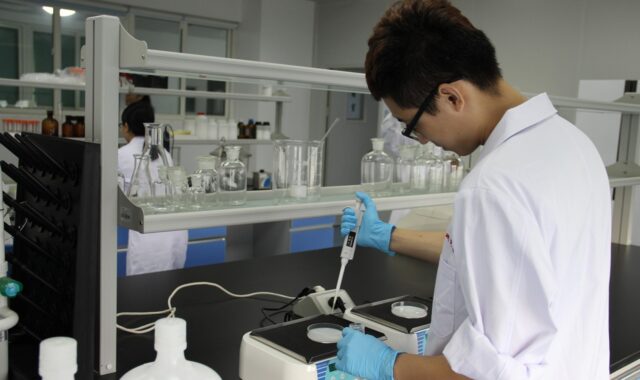
Small errors at the preparation stage can carry through an entire assay. For pipettes, the main issues are volume range, accuracy, precision, tip fit, user technique, and calibration history. For balances, resolution is only one part of performance. Vibration, drafts, bench stability, leveling, and warm-up time can all affect readings. A balance with strong specifications may still perform poorly if it is placed beside a centrifuge, an air vent, or a frequently used door.
Centrifugation
Centrifuges should be compared by relative centrifugal force, rotor compatibility, acceleration and braking profiles, refrigeration, imbalance detection, lid locking, and rotor life management. In biochemical labs, refrigerated centrifuges are often needed when proteins, enzymes, cells, or temperature-sensitive reagents are processed. A low-cost unit may be adequate for routine pelleting, but it can become limiting when protocols require temperature control, sealed rotors, or higher force ranges.
Temperature control and storage
Temperature affects enzyme kinetics, reagent stability, cell viability, and sample integrity. Incubators, water baths, dry baths, refrigerators, and freezers should be assessed for uniformity, recovery after door opening, alarm capability, and available space. Storage equipment also needs a monitoring plan. Field laboratory guidance in the NCBI Bookshelf notes the importance of regular checks for refrigerators, freezers, clean optics, centrifuge rotor condition, and calibration of routinely used equipment such as balances, pH meters, and variable-volume pipettes. (ncbi.nlm.nih.gov)
Optical measurement
Spectrophotometers, fluorometers, and microplate readers turn biochemical reactions into measurable signals. Selection should begin with the assay format: cuvette or plate, absorbance or fluorescence, endpoint or kinetic reading, single wavelength or scanning, manual or automated sample handling. Labs should also consider stray light performance, wavelength accuracy, pathlength correction, data export, and software access control. For high-throughput enzyme assays, a plate reader may be more efficient than a cuvette spectrophotometer. For method development, a scanning UV-Vis instrument may offer more flexibility.
Quality, calibration, and data integrity
Reliable instruments need a management system behind them. ISO/IEC 17025 is the widely referenced standard for the competence of testing and calibration laboratories, and ISO describes it as a framework that helps laboratories demonstrate their capacity to deliver trusted results. (iso.org) Even when a research or teaching lab is not accredited, the same practical principle applies: equipment should be identified, qualified for its intended use, maintained, calibrated where relevant, and removed from service when it no longer performs acceptably.
A useful equipment record normally includes the instrument ID, location, responsible person, manufacturer and model, installation date, operating manuals, maintenance history, calibration certificates, acceptance checks, software version, service contacts, and any limitations on use. This is not paperwork for its own sake. It helps the lab connect an unusual result with a possible instrument issue, such as a drifting pH meter, a freezer excursion, a worn centrifuge rotor, or an outdated software method.
For regulated environments, data integrity can be as important as mechanical performance. FDA guidance on Part 11 addresses electronic records and electronic signatures, including system access and audit trail expectations for records subject to the rule. FDA’s more recent clinical investigation guidance also discusses audit trails that capture record activities, user identity, and date and time information. (fda.gov) A small academic lab may not be under those rules, but the underlying principle is still relevant: results should be attributable, legible, traceable, and protected from accidental or unauthorized change.
Safety and biosafety should shape instrument choice
Instrument selection cannot be separated from hazard assessment. OSHA’s laboratory standard for occupational exposure to hazardous chemicals requires a Chemical Hygiene Plan for covered laboratories, including measures intended to protect workers from chemical hazards. (osha.gov) This matters when choosing fume hoods, solvent storage, heating equipment, compressed gas arrangements, spill controls, and waste handling systems.
Biological work requires a separate but related assessment. The WHO Laboratory Biosafety Manual, fourth edition, presents a risk- and evidence-based approach to biosafety, with risk assessment used to select proportionate control measures. (who.int) The CDC/NIH Biosafety in Microbiological and Biomedical Laboratories page describes the BMBL as an advisory best-practice document built around protocol-driven risk assessment rather than one fixed rule for every situation. (cdc.gov) See also: buying guides.
This is where many purchasing mistakes occur. A clean bench is not a substitute for a biosafety cabinet. A biosafety cabinet is not a general chemical fume hood. A refrigerated centrifuge may reduce thermal stress on samples, but aerosol containment depends on rotor and bucket design as well as safe loading and decontamination procedures. An autoclave helps with decontamination only when cycles are appropriate for the load and verified according to the lab’s procedure.
How to compare instruments before buying or upgrading
A disciplined comparison prevents expensive mismatches. Before choosing a model, labs should document the intended assays, sample volume, sample hazard, throughput, required sensitivity, precision needs, available space, utilities, software requirements, service access, consumable availability, and training burden. The best-value instrument is rarely the one with the longest feature list. It is the one that can perform the required work reliably within the lab’s staffing, facility, and quality system.
- Define the method first. Identify protocol requirements before comparing brands or models.
- Separate must-have features from conveniences. Refrigeration, sealed rotors, audit trails, or fluorescence detection may be essential in one workflow and unnecessary in another.
- Check facility fit. Power, heat output, ventilation, bench strength, drainage, noise, and clearance can determine whether an instrument is usable.
- Estimate lifecycle cost. Include service contracts, calibration, spare parts, lamps, filters, columns, tips, plates, probes, software licenses, and downtime risk.
- Plan training and ownership. Assign responsibility for routine checks, cleaning, maintenance logs, software permissions, and out-of-service decisions.
- Verify documentation. Manuals, certificates, validation packages, maintenance procedures, and compatible consumables should be available before the instrument becomes critical to the workflow.
Common pitfalls that reduce instrument value
Buying capacity before defining throughput. A high-throughput plate reader or automated system may sit underused if sample preparation remains manual and slow. Conversely, a low-capacity centrifuge can become a bottleneck if the lab scales up sample volume.
Ignoring consumables. Pipette tips, tubes, rotors, filters, columns, plates, cuvettes, probes, seals, reagents, and calibration materials can determine both operating cost and method reliability. Consumable lock-in should be considered before purchase, not after the first supply shortage.
Treating software as an accessory. Software controls methods, user access, calculations, exports, and records. A strong optical system with weak export options can create manual transcription steps, increasing error risk. Labs that need regulated records should evaluate software controls before installation, not during an audit.
Forgetting maintenance access. Some instruments need certified service, replacement lamps, probes, filters, gaskets, sensors, refrigeration checks, or rotor inspections. If local support is slow or spare parts are difficult to obtain, uptime may be worse than the specification sheet suggests.
Frequently asked questions
What are the most common biochem lab instruments?
Common biochem lab instruments include pipettes, balances, centrifuges, pH meters, incubators, water baths, refrigerators, freezers, spectrophotometers, microplate readers, electrophoresis systems, thermal cyclers, biosafety cabinets, fume hoods, and autoclaves. The exact list depends on whether the lab works mainly with proteins, nucleic acids, cells, metabolites, teaching samples, or regulated testing.
How often should biochem lab instruments be calibrated?
There is no universal interval for every instrument. Calibration frequency should reflect manufacturer guidance, frequency of use, environmental conditions, historical performance, method criticality, and applicable quality or regulatory requirements. High-impact instruments such as balances, pipettes, pH meters, temperature probes, and analytical detectors often need scheduled checks, plus additional checks after repair, relocation, or suspected malfunction.
What is the difference between a biosafety cabinet and a chemical fume hood?
A biosafety cabinet is selected for biological containment and product or personnel protection, depending on its class and use. A chemical fume hood is designed to help control hazardous chemical vapors and fumes through exhaust ventilation. They are not interchangeable, so the correct choice depends on the hazard assessment for the procedure.
Should a small lab buy advanced analytical instruments first?
Usually, a small lab should stabilize its core workflow before buying advanced instruments. Accurate preparation, safe storage, temperature control, separation, basic detection, documentation, and maintenance routines often have a larger effect on daily reliability than adding a sophisticated instrument to an unstable process.