Science lab instruments and how to choose equipment by workflow, safety, and measurement needs

What science lab instruments are and why selection should start with the workflow
Science lab instruments are the tools used to observe, measure, prepare, separate, heat, cool, store, analyze, and contain samples in a laboratory. The right choice is rarely the newest model or the highest specification on a datasheet. It depends on the work being performed, the hazards involved, the required measurement quality, the sample volume, and the people who will operate and maintain the equipment.
A teaching lab, a microbiology bench, a chemistry preparation room, and a quality-control laboratory may all use basic lab equipment, but they do not need the same configuration. A sound selection process starts with the workflow: what must be measured, what must be controlled, what could go wrong, and what records are needed to support the result.

This guide organizes common science lab instruments by practical use rather than catalog category. That makes it easier for buyers, lab managers, and technical readers to compare equipment by function, safety, accuracy, and operating burden. For more related coverage, see the lab instruments section.
Core instrument groups found in many science labs
Most laboratories combine several instrument groups. The exact list depends on the discipline, but many labs need tools for measurement, sample preparation, environmental control, separation, containment, and documentation.
Measurement and observation instruments
Measurement instruments convert a physical, chemical, or biological property into a value that can be recorded and compared. Common examples include balances, pH meters, thermometers, conductivity meters, spectrophotometers, microscopes, data loggers, and pressure gauges. Their usefulness depends on range, resolution, accuracy, repeatability, calibration status, and suitability for the sample matrix.
A balance used for a classroom demonstration has different requirements from an analytical balance used for formulation, reagent preparation, or quality testing. In the same way, a basic compound microscope may be sufficient for teaching cell structure, while fluorescence microscopy or digital imaging may be required for more specialized biological analysis.
Sample preparation instruments
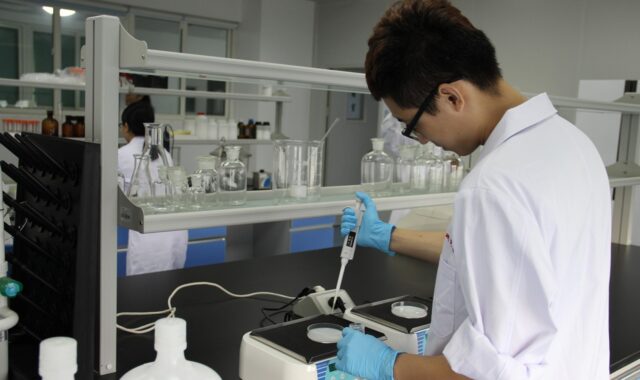
Sample preparation instruments make materials ready for measurement or testing. They include centrifuges, vortex mixers, homogenizers, hot plates, stirrers, pipettes, glassware, filtration assemblies, incubators, water baths, autoclaves, and refrigerators. These instruments often determine whether the final analysis is reproducible. Poor mixing, uneven heating, evaporation, contamination, or inconsistent pipetting can create error before the measuring instrument is ever used.
Separation and analysis instruments
Separation and analytical instruments help identify or quantify sample components. Examples include centrifuges, electrophoresis systems, chromatography systems, spectrometers, and plate readers. These instruments usually require more method control, consumables, training, and maintenance than basic bench equipment. When evaluating them, the key question is not only what the instrument can detect. The lab also has to support the sample throughput, method validation, waste handling, and data review that come with it.
Safety and containment instruments
Safety equipment is not an accessory to the scientific workflow; it is part of the workflow. Chemical fume hoods, biological safety cabinets, glove boxes, emergency showers, eyewash stations, flammable-storage cabinets, spill-control materials, sharps containers, and PPE storage systems all reduce risk when selected and used correctly. The CDC and NIH Biosafety in Microbiological and Biomedical Laboratories guidance describes containment as a combination of laboratory practices, safety equipment, and facility safeguards. OSHA’s Laboratory Standard also requires a written Chemical Hygiene Plan when hazardous chemicals are used in covered laboratory workplaces.
How safety requirements change the instrument choice
Safety needs should be assessed before purchase, not after installation. An instrument that looks suitable on performance alone may be inappropriate if it aerosolizes infectious material, uses flammable solvents, generates heat, produces pressure, creates electrical risk, or requires waste handling that the facility cannot support.
For chemical work, the selection process should consider whether vapors, dusts, splashes, or incompatible materials could be released during normal use or foreseeable misuse. A hot plate used with volatile solvents, for example, raises different concerns from a hot plate used only for aqueous solutions. For biological work, the key issue is whether the activity can generate aerosols, droplets, sharps exposure, or contamination of surfaces and instruments.
Containment equipment must match the hazard. A chemical fume hood is designed for chemical vapor control, while a biological safety cabinet is designed around biological containment and airflow protection. These are not interchangeable instruments. Selection should be based on the hazard assessment, the procedure, the sample, and the applicable institutional safety policy.
Measurement quality matters more than the specification sheet alone
Instrument specifications are useful, but they do not prove by themselves that a lab result is reliable. A specification sheet may list readability, range, detector type, temperature stability, or maximum speed. Actual performance still depends on installation, calibration, operator technique, environmental conditions, maintenance, and documentation.
ISO/IEC 17025:2017, the international standard used by testing and calibration laboratories, emphasizes competence, valid results, metrological traceability, and control of equipment that can influence laboratory activities. Even when a lab is not seeking accreditation, the principle is still useful: instruments that affect results should be identified, maintained, checked, and calibrated when necessary.
| Instrument type | Key selection question | Common quality control concern |
|---|---|---|
| Analytical balance | What mass range and readability are required? | Drafts, vibration, leveling, calibration weights, and cleaning |
| pH meter | What sample type and pH range will be tested? | Electrode condition, buffer quality, temperature compensation, and storage |
| Microscope | What resolution, contrast method, and imaging need are expected? | Optics alignment, illumination, lens care, and sample preparation |
| Centrifuge | What rotor, tube type, speed, and sample hazard are involved? | Rotor inspection, balancing, aerosol control, and maintenance records |
| Incubator | What temperature range, uniformity, and contamination control are needed? | Temperature mapping, cleaning, door-opening patterns, and alarms |
For weighing devices, NIST Handbook 44 provides technical requirements used in legal metrology in the United States, including specifications and tolerances for weighing and measuring devices. Not every educational or research balance is used in a legal-for-trade context, but the handbook reinforces an important point: weighing is a controlled measurement activity, not simply a matter of placing material on a pan.
A practical framework for choosing science lab instruments
A structured selection framework helps prevent overspending on features that do not improve the work. It also reduces the risk of buying under-specified equipment that creates safety or data problems later.
Define the task and sample
Start by describing the sample, the expected range, the number of samples per day, the required turnaround time, and the decision that will be made from the result. A lab that demonstrates density in a classroom does not need the same instruments as a lab that releases production batches or supports regulated testing.
Match the instrument to the environment
Laboratory conditions can affect performance. Temperature changes, humidity, dust, corrosive vapors, electromagnetic interference, vibration, bench stability, water quality, and electrical supply can all influence instruments. Analytical balances, microscopes, incubators, refrigerators, and spectrophotometers are especially sensitive to their surroundings. See also: buying guides.
Plan for calibration and verification
Calibration should not be treated as an afterthought. Before purchase, determine whether the instrument needs factory calibration, third-party calibration, in-house verification, certified reference materials, test weights, temperature probes, or routine performance checks. Also decide who will review the records and what action is required if an instrument fails a check.
Review consumables, accessories, and maintenance
The purchase price is only one part of the total cost. Pipette tips, cuvettes, columns, filters, tubes, lamps, electrodes, rotors, seals, gases, reagents, service contracts, software licenses, and waste containers may determine whether the instrument is affordable over time. Some instruments also require scheduled preventive maintenance to remain safe and reliable.
Consider training and data handling
An instrument that is technically powerful but difficult to operate can become a source of inconsistent results. Training should cover setup, normal operation, shutdown, cleaning, limitations, error messages, and emergency response. If the instrument generates electronic data, the laboratory should also consider file naming, backups, access control, review practices, and compatibility with existing systems.
Common mistakes when evaluating laboratory equipment
One common mistake is choosing by maximum specification rather than real use. A centrifuge with a very high maximum speed may not be useful if the required rotor, tube compatibility, temperature control, or containment option is missing. A microscope with advanced imaging features may not improve results if sample preparation and illumination are poor.
A second mistake is ignoring installation. Some instruments need ventilation, drainage, purified water, stable benches, gas cylinders, dedicated circuits, floor loading checks, or clearance for heat dissipation. If these requirements are discovered late, the instrument may sit unused or operate outside recommended conditions.
A third mistake is confusing purchase with readiness. A new instrument is not ready for reliable work until it is received, inspected, installed, configured, verified, documented, and assigned to trained users. For critical equipment, laboratories often define acceptance checks before routine use. This is especially important when results affect safety, compliance, product quality, or research conclusions.
How instrument priorities differ by lab type
Different laboratories assign different weight to cost, durability, sensitivity, speed, and documentation. In education, instruments should usually be robust, easy to clean, safe for repeated student use, and simple enough to support learning objectives. In research, flexibility and method development may matter more. In industrial quality control, repeatability, throughput, service response, and recordkeeping may take priority. In clinical or microbiology environments, biosafety, contamination control, and validated workflows become central concerns.
This is why a universal list of science lab instruments can be misleading. A better approach is to build an instrument map: list each workflow step, identify the required equipment, define the safety controls, and decide how the result will be checked. The map may show that the lab needs fewer instruments than expected, but stronger training, verification, or sample handling.
Frequently asked questions
What are the most common science lab instruments?
Common science lab instruments include balances, microscopes, pipettes, beakers, flasks, thermometers, pH meters, centrifuges, hot plates, stirrers, incubators, refrigerators, spectrophotometers, and safety equipment such as fume hoods or biological safety cabinets. The right combination depends on the subject area and the procedures being performed.
How should a lab decide between basic and advanced instruments?
The decision should be based on the measurement requirement, sample type, throughput, safety risk, operator skill, maintenance capacity, and documentation needs. Advanced instruments are valuable when their capabilities solve a defined problem. Otherwise, simpler equipment may be easier to operate and maintain.
Why is calibration important for laboratory instruments?
Calibration and verification help show whether an instrument is producing results within an acceptable range. Without these checks, a result may look precise but still be wrong. Balances, thermometers, pipettes, pH meters, and many analytical instruments should have a defined check or calibration schedule based on their use and risk.
Are safety instruments part of laboratory equipment planning?
Yes. Safety instruments and controls should be planned with the scientific equipment because they affect where and how procedures can be performed. Fume hoods, biological safety cabinets, storage cabinets, emergency equipment, and PPE systems can determine whether a workflow is safe enough to run.
What should be checked before buying used laboratory instruments?
Before buying used equipment, check the model history, service records, calibration status, software availability, missing accessories, contamination risk, electrical condition, replacement parts, and whether the manufacturer or a qualified service provider still supports the instrument. For safety-critical or measurement-critical work, acceptance testing is especially important.
Key takeaway
Choosing science lab instruments is a technical decision, not just a purchasing task. The strongest choices connect the instrument to the workflow, hazard assessment, measurement requirement, maintenance plan, and user training. When a lab evaluates equipment this way, it is more likely to produce reliable results, protect staff and students, and avoid hidden costs after installation.