How to choose radon testing equipment for reliable indoor air measurements
What radon testing equipment should do
Radon testing equipment should be chosen for the decision it needs to support. A low-cost charcoal kit can quickly indicate whether a home may have elevated radon. An alpha-track detector is better suited to estimating a long-term average. A continuous radon monitor can show hour-by-hour changes, support professional investigations, and document test conditions.
For homes, EPA guidance uses 4 pCi/L, or about 150 Bq/m³, as the level at which fixing is recommended. EPA also advises considering reduction when results are between 2 and 4 pCi/L. Because radon levels vary with weather, season, ventilation, and building operation, equipment selection has to be paired with proper placement, test duration, and quality control.

For more instrumentation topics, see our testing equipment category.
Why equipment choice matters in radon measurement
Radon is an odorless, invisible radioactive gas produced by the natural decay of uranium in rock, soil, and water. It can enter buildings through foundations, slab openings, crawl spaces, sumps, construction joints, and other pathways. The Centers for Disease Control and Prevention updated its public radon health information in June 2026 and continues to describe radon as a major lung cancer risk, with testing as the only practical way to know whether a building has an elevated level.
Radon testing is different from many general indoor air checks because one reading is meaningful only when the device, exposure period, and test conditions match the question being asked. The user may be screening a home before deciding on follow-up, checking a mitigation system after installation, producing data for a real estate transaction, or testing a school, multifamily property, or workplace. Each situation can call for a different measurement approach.
The equipment alone does not remove uncertainty. Short-term results can shift with storms, pressure differences, open windows, heating season conditions, or mechanical ventilation. Long-term devices reduce some of that variability by averaging over a longer period. Active instruments add useful detail, but they also require power, careful setup, calibration practices, and trained interpretation.
Main types of radon testing equipment
Activated charcoal and charcoal liquid scintillation devices
Activated charcoal devices are common short-term passive tests. They do not need power. The device is opened in the test location, radon is adsorbed by the charcoal during the exposure period, and the sealed device is sent to a laboratory for analysis. National Radon Program Services describes common charcoal test kits as devices typically used for two or four days, although short-term radon testing as a category can run from two days to 90 days depending on the device.
The main advantage is accessibility. Charcoal kits are inexpensive, easy to deploy, and suitable for an initial screen when a quick answer is needed. The limitation is that they provide an average over a short window, not a year-round average. Some charcoal technologies can also be affected by high humidity, so the kit instructions and laboratory requirements matter.
Alpha-track detectors
Alpha-track detectors are passive devices commonly used for long-term radon testing. They contain material that records microscopic damage tracks from alpha particles. After exposure, the detector goes to a laboratory, where track density is used to calculate the average radon concentration during the test period.
For many homes and buildings, alpha-track testing is useful when the goal is to estimate a more representative annual average. EPA and National Radon Program Services guidance describes long-term tests as those remaining in place for more than 90 days, with longer exposure generally giving a better picture of year-round conditions. The tradeoff is time: alpha-track testing is not suitable when a decision is needed within a few days.
Electret ion chamber detectors
Electret ion chambers can be used for short-term or long-term radon measurement, depending on the chamber and deployment method. They use a charged electret that loses voltage as ionization occurs inside the chamber. The voltage change is then converted into a radon concentration.
These devices are often handled through laboratories or trained measurement providers rather than casual retail use. Their value is flexibility, but they require correct handling before and after exposure, attention to background gamma correction where applicable, and proper documentation.
Continuous radon monitors
Continuous radon monitors, often called CRMs, are active devices that require power. Instead of producing only one average at the end of a test, they record radon readings at intervals. Some monitors also record temperature, humidity, pressure, movement, power interruption, or other indicators that help identify abnormal test conditions.
CRMs are useful where trend information matters, such as real estate testing, diagnostics before mitigation, post-mitigation verification, and buildings where operation changes through the day. They generally cost more than passive tests and are commonly used by trained testers. For professional work, device approval, calibration, and quality assurance records are as important as the monitor model.
How to match equipment to the testing purpose
| Testing purpose | Useful equipment | Why it fits | Important limitation |
|---|---|---|---|
| Initial home screening | Charcoal kit or other short-term passive device | Fast, accessible, and low cost | May not represent annual average |
| Long-term exposure estimate | Alpha-track detector or long-term electret | Averages seasonal and daily variation | Requires more than 90 days |
| Real estate or time-sensitive testing | Professional CRM or properly deployed short-term devices | Produces faster documentation and may show test-condition data | Acceptance depends on state rules and protocol |
| Post-mitigation check | Short-term test followed by periodic or long-term testing | Confirms whether reduction appears effective | One short test should not be treated as permanent proof |
| Schools, multifamily, or commercial buildings | Protocol-based passive devices or CRMs | Supports room-by-room planning and documentation | Requires a building-specific sampling plan |
For a homeowner who wants a first answer, a certified laboratory short-term kit is often enough to decide whether follow-up is needed. If the result is near the action level, a second test or a longer-term measurement gives a stronger basis for action. For a facility manager, the question is usually more complex. Large buildings can have different zones, foundations, HVAC schedules, occupancy patterns, and pressure relationships. In that setting, the equipment plan should follow a recognized protocol rather than relying on one device in one location.
EPA’s school guidance references ANSI/AARST MA-MFLB-2023 for measurements in multifamily, school, commercial, and mixed-use buildings. That standard became effective for compliance on December 1, 2023, and consolidates earlier multifamily and large-building measurement protocols. For equipment buyers, the practical issue is that building type can determine not only the device, but also the number of test locations, timing, documentation, and follow-up process.
Quality controls that affect reliability
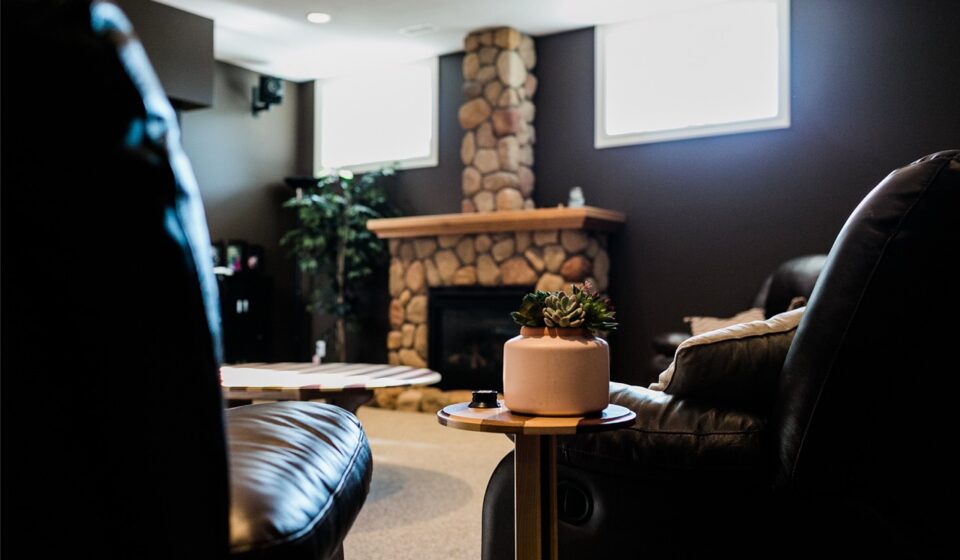
Radon testing reliability depends on more than detector technology. The same equipment can produce weak data if it is placed incorrectly or used under unsuitable conditions. EPA consumer guidance says short-term tests should be placed in the lowest lived-in level of a home, in a regularly used room, not in a kitchen or bathroom. The device should be at least 20 inches above the floor and away from drafts, high heat, high humidity, and exterior walls. See also: buying guides.
Closed-building conditions are especially important for short-term testing. For a two- or three-day short-term test, EPA guidance calls for windows and outside doors to be closed at least 12 hours before the test begins and kept closed as much as practical during the test. Tests should not be started during unusually severe storms or periods of unusually high winds, because those conditions can distort indoor radon levels.
Laboratory and professional quality systems are also central. The National Radon Safety Board describes accredited laboratory expectations that include quality assurance programs, standard operating procedures, blind tests, inter-comparisons, blanks, duplicates, spikes, and device-specific proficiency testing. For active monitors, calibration records and chamber exposure checks help show that the instrument has remained within expected performance limits.
Before choosing radon testing equipment, buyers should confirm the following points:
- Is the device intended for short-term screening, long-term averaging, or continuous monitoring?
- Does a recognized laboratory analyze the device after exposure?
- Is the device listed or accepted for the intended professional or regulatory use?
- What humidity, temperature, power, handling, or shipping limits apply?
- Can the tester document placement, start and stop times, and building conditions?
- For CRMs, are calibration and quality assurance records available?
How to interpret results without overclaiming
Radon results are usually reported in picocuries per liter in the United States. EPA recommends fixing homes at 4 pCi/L or higher and considering reduction from 2 to 4 pCi/L because no known safe level of radon exposure has been established. EPA’s current public materials also estimate about 21,000 radon-related lung cancer deaths each year in the United States, with risk increasing over long-term exposure.
A short-term result below 4 pCi/L is not a lifetime guarantee. It means the measured location, during that exposure period, did not show a result at or above the action level. If occupants begin using a lower level more often, if a basement is renovated, if HVAC operation changes, or if mitigation work is completed, retesting is sensible. EPA consumer guidance also notes that major renovations can change radon levels, so post-work testing is important.
When a short-term result is 4 pCi/L or higher, EPA guidance recommends follow-up testing. If there is time, a long-term test can better estimate the annual average. If a faster decision is needed, a second short-term test may be used, and the average of the two short-term tests can guide action. If the first short-term result is more than twice the 4 pCi/L action level, EPA guidance favors an immediate second short-term test.
Selection checklist for buyers and facility teams
Choose radon testing equipment by working backward from the decision. If the decision is whether to investigate further, use an affordable short-term device from a qualified lab. If the decision is whether a building’s typical exposure is elevated, use a long-term detector. If the decision depends on timing, tamper evidence, or hourly changes, use a CRM handled by a qualified tester. If the building is not a single-family home, check whether ANSI/AARST or local requirements define the sampling plan.
For industry readers, the key distinction is between a device and a measurement system. A measurement system includes the detector, instructions, placement rules, exposure duration, laboratory analysis, calibration, records, quality controls, and interpretation criteria. Buying a more advanced instrument does not replace those basics. In radon measurement, reliable data comes from matching the equipment to the use case and controlling the conditions around the test.
Frequently asked questions
Is a continuous radon monitor always better than a charcoal kit?
No. A continuous monitor provides more detailed data, but a laboratory-analyzed charcoal kit can be appropriate for simple short-term screening. The better choice depends on whether the user needs a quick average, hourly trend data, professional documentation, or long-term exposure information.
How long should a radon test run?
Short-term radon tests run from two days to 90 days depending on the device, and many common charcoal kits run for two to four days. Long-term tests run for more than 90 days and are more useful for estimating year-round average exposure.
Where should radon equipment be placed in a home?
EPA guidance places the device in the lowest lived-in level, in a room used regularly, at least 20 inches above the floor, and away from drafts, exterior walls, high heat, and high humidity. Kitchens and bathrooms are generally avoided for standard home testing.
Can one radon test prove a building is safe forever?
No. Radon levels can change with seasons, weather, ventilation, foundation changes, renovations, and mitigation system performance. A test documents a period of measurement, not a permanent condition.
What should commercial buildings and schools consider before testing?
They should consider building layout, occupancy, HVAC schedules, foundation zones, and applicable measurement protocols. For multifamily, school, commercial, and mixed-use buildings, ANSI/AARST MA-MFLB-2023 is an important reference for measurement procedures and minimum requirements.