Safety first lab practices for safer daily laboratory work

What a safety first lab really means
A safety first lab is not defined by signage alone. It is a laboratory where hazards are identified before work starts, controls are selected before exposure occurs, and people understand what to do when conditions change. For chemical laboratories in the United States, OSHA’s Laboratory Standard requires covered employers using hazardous chemicals to develop and carry out a written Chemical Hygiene Plan. For biological work, CDC and NIH biosafety guidance emphasizes risk assessment, safe practices, safety equipment, and facility safeguards. In daily work, the principle is straightforward: do not rely on luck, memory, or personal caution alone. Build safety into the experiment, the instrument setup, the storage system, the emergency response, and the training routine.
This article summarizes practical guidance from OSHA, NIOSH, CDC/NIH biosafety materials, and American Chemical Society safety education resources. It is intended as general industry information, not as a substitute for site-specific legal, biosafety, radiation, chemical hygiene, or institutional review.

Start with the work, not the checklist
The strongest lab safety programs begin with a direct question: what could realistically go wrong during this specific task? A checklist helps, but it should come after the work has been understood. A small-volume titration, solvent transfer, centrifuge run, cryogenic fill, biological culture, and instrument calibration each create different combinations of chemical, physical, biological, ergonomic, and equipment-related hazards.
A useful pre-task review identifies the materials, the scale, the energy involved, likely exposure routes, by-products, the waste stream, and the point at which the procedure must stop. It should also consider who is doing the work. A procedure that is routine for a trained analyst may require closer supervision, a smaller starting scale, or a written demonstration step for a new student, technician, or visiting researcher.
The American Chemical Society’s RAMP framework is a practical way to structure this review: recognize hazards, assess risks, minimize risks, and prepare for emergencies. Its value is that it moves safety beyond rule memorization and connects the hazard to the actual context of the work.
- Recognize hazards: review the safety data sheet, instrument manual, reaction chemistry, biological agent information, pressure or vacuum conditions, and waste compatibility.
- Assess risks: consider probability, severity, exposure route, volume, concentration, temperature, pressure, duration, and worker experience.
- Minimize risks: select controls using the hierarchy of controls rather than moving immediately to gloves and goggles.
- Prepare for emergencies: confirm spill materials, eyewash and shower access, shutoff points, alarms, evacuation routes, and reporting procedures.
Use the hierarchy of controls before choosing PPE
PPE is important, but it should not be treated as the entire safety plan. NIOSH describes the hierarchy of controls as a way to prioritize more effective risk reduction methods before relying on personal protective equipment. In order of typical effectiveness, the hierarchy includes elimination, substitution, engineering controls, administrative controls, and PPE.
In a laboratory, elimination might mean avoiding an unnecessary reagent, replacing a high-hazard demonstration, or purchasing a pre-diluted standard instead of preparing it from concentrated stock. Substitution might mean using a less toxic solvent or a lower concentration when the method allows. Engineering controls include chemical fume hoods, biological safety cabinets, local exhaust, splash shields, interlocked instrument enclosures, pressure relief devices, and closed transfer systems. Administrative controls include standard operating procedures, scheduling, signage, training, access limits, and approval steps for higher-risk work.
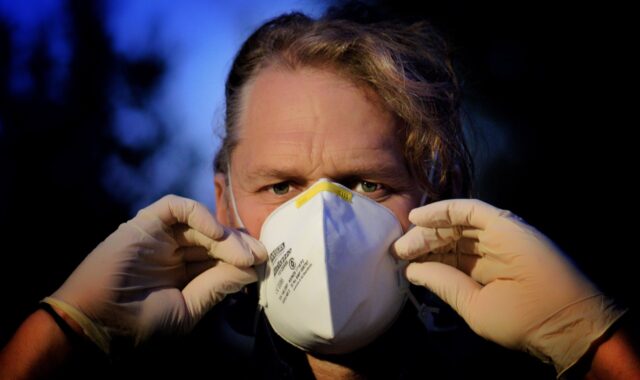
PPE comes last in the hierarchy, but it still matters. OSHA’s general PPE requirements include a workplace hazard assessment, PPE selection, communication of selection decisions, and proper fit. For laboratories, eye and face protection, gloves, coats, aprons, respiratory protection where required, thermal protection, hearing protection, or laser eyewear must be matched to the hazard. A glove that works for one solvent may fail quickly with another. Safety glasses may be insufficient where splashes are credible; goggles or a face shield may be needed. Respirators require a formal program and should not be improvised as a quick fix for poor ventilation.
Build the chemical hygiene plan into daily work
For covered U.S. laboratories using hazardous chemicals, the OSHA Laboratory Standard centers on the Chemical Hygiene Plan. In practical terms, the plan should not sit untouched in a binder. It should guide how people plan experiments, operate equipment, store chemicals, label containers, maintain ventilation, manage waste, and respond to exposure concerns.
A useful Chemical Hygiene Plan generally addresses standard operating procedures, control measures, fume hood and protective equipment performance, employee information and training, circumstances requiring prior approval, medical consultation and examination provisions, designation of responsible personnel, and additional protections for particularly hazardous substances. The plan should reflect the actual laboratory, not a generic template copied from another facility.
Hazard communication also deserves close attention. OSHA updated its Hazard Communication Standard in a final rule published on May 20, 2024, with the rule taking effect on July 19, 2024. OSHA later extended several compliance dates on January 15, 2026. As of November 3, 2026, one important employer deadline for substances is November 20, 2026, when employers must update alternative workplace labels, hazard communication programs, and additional training as necessary for newly identified hazards. Mixture-related employer obligations extend later, with a May 19, 2028 date identified in OSHA’s current regulatory text. Laboratories should track updated safety data sheets, compare changes against existing procedures, and avoid assuming that a familiar bottle always carries the same classification or precautionary language.
For day-to-day chemical work, several habits make the plan visible:
- Label secondary containers immediately with clear, durable information.
- Keep incompatible chemicals separated by hazard class, not only alphabetically.
- Use fume hoods for compatible work, not as long-term storage cabinets.
- Close containers when material is not being dispensed or transferred.
- Confirm waste labels, caps, compatibility, and accumulation limits under site rules.
- Review spill response steps before using unfamiliar or higher-hazard chemicals.
Control instrument and equipment risks
Laboratory instruments reduce many manual steps, but they introduce their own hazards. Rotating parts, high voltage, heat, vacuum, pressure, compressed gases, lasers, ultraviolet light, cryogens, robotics, and software-controlled motion can all create risk when setup or maintenance is rushed. A safety first lab treats instrument safety as part of method quality, not as an afterthought.
Before operation, users should know the instrument’s normal operating range, required guards, interlocks, ventilation needs, warm-up or cool-down steps, compatible consumables, and shutdown procedure. A centrifuge, for example, requires balanced loads, compatible tubes, inspected rotors, secured lids, and clear action steps if vibration or unusual noise occurs. An autoclave requires training on loading, venting, burn prevention, biological indicators or other verification where applicable, and safe unloading. Vacuum systems require glassware inspection, shielding where implosion is credible, compatible traps, and pump protection. Compressed gas cylinders need restraint, proper regulators, cap handling, leak checks, and segregation based on gas hazard.
Maintenance is a common weak point. Lockout, depressurization, decontamination, cool-down, and stored-energy checks should be planned before service begins. A technician opening an instrument should not discover residual solvents, pressurized lines, contaminated surfaces, or energized components by surprise. Where instruments are shared, logbooks or electronic records should capture service dates, unusual events, alarms, corrective actions, and restrictions on use.
| Risk area | First control to consider | Instrument practice | Verification record |
|---|---|---|---|
| Chemical vapor | Substitution or ventilation | Use compatible fume hood or closed transfer | Hood check, method note, SDS review |
| Rotating equipment | Engineering guard or interlock | Balance loads and inspect rotors | Run log and maintenance record |
| Pressure or vacuum | Rated components and shielding | Inspect glassware, tubing, valves, and traps | Pre-use checklist |
| Thermal hazard | Isolation and tools | Use heat-resistant gloves and marked hot zones | Training record and SOP |
| Biological exposure | Containment and work practice | Use appropriate cabinet, disinfection, and waste route | Risk assessment and decontamination log |
Match biosafety controls to the actual risk
Biological laboratories need a risk-based approach, not a label-only approach. The CDC and NIH publication Biosafety in Microbiological and Biomedical Laboratories, sixth edition, describes containment as a combination of microbiological practices, safety equipment, and facility safeguards. That structure is useful because it reduces overreliance on any single element.
A biosafety review should consider the agent, the procedure, the concentration, the volume, the host or cell line, the route of transmission, the possibility of aerosol generation, the experience of personnel, and the condition of the facility. Procedures such as vortexing, centrifuging, sonicating, pipetting, necropsy, and sharps use can change the risk profile even when the biological material is familiar. See also: buying guides.
Common biosafety controls include validated disinfection procedures, appropriate biological safety cabinet use, sealed centrifuge cups or rotors where aerosol risk exists, sharps minimization, hand hygiene, controlled access, incident reporting, and clear waste treatment routes. If a procedure changes, the biosafety review should be revisited. A new instrument, new sample type, or higher concentration may require different containment even if the project name remains the same.
Prepare for emergencies before the first exposure
Emergency preparation should be specific enough that a person under stress can act quickly. “Know what to do” is not a procedure. A stronger approach identifies the likely event, the first action, the notification route, the equipment location, and the decision point for evacuation or outside assistance.
Emergency eyewash and shower access should be evaluated against the actual hazards in the room. The ANSI/ISEA emergency eyewash and shower consensus standard is widely referenced for concepts such as quick access, unobstructed travel, tepid flushing fluid, and sustained flushing capability. Laboratories should follow the applicable regulatory, institutional, and facility requirements for inspection, activation, and maintenance.
Spill readiness should also be realistic. A spill kit is useful only if it matches the materials used and workers are trained on when to clean up and when to leave. Small nuisance spills, flammable solvent releases, mercury contamination, reactive chemical incidents, biological spills, and unknown residues require different responses. The safest action may be isolation, evacuation, and escalation rather than cleanup by the nearest person.
Near-miss reporting is part of emergency preparation. A cracked centrifuge tube, an unexpected pressure release, a hood alarm, a mislabeled bottle, or a splash that did not reach skin can reveal system weaknesses. Treating near misses as learning opportunities helps a lab improve before an injury or exposure occurs.
Make training continuous and observable
Training is often documented once, but risk changes constantly. A safety first lab trains before new work begins, when procedures change, after incidents or near misses, when new equipment is installed, and when updated hazard information is received. Training should include both knowledge and observable skill. Reading an SOP is not the same as demonstrating safe setup, correct PPE selection, waste labeling, hood use, or emergency shutdown.
Supervisors and lab managers can make training more effective by using short task-based checks. Ask the worker to explain the main hazard, show the control, identify the stop condition, locate emergency equipment, and describe the waste route. This takes less time than a long lecture and shows whether the person can apply the procedure at the actual bench.
For more practical workplace safety topics, visit our lab safety section.
Frequently asked questions
What is the first step in creating a safety first lab?
The first step is a task-specific risk assessment. Identify the hazards, the people involved, the scale of work, the exposure routes, the equipment conditions, the waste stream, and the emergency actions before the task begins.
Is PPE enough for laboratory safety?
No. PPE is necessary for many tasks, but it is usually the final layer of protection. More reliable controls include eliminating unnecessary hazards, substituting lower-risk materials, using engineering controls, and creating clear procedures and training.
How often should a lab review its safety procedures?
Procedures should be reviewed when materials, methods, instruments, personnel, regulations, or hazard information change. They should also be reviewed after incidents, near misses, maintenance problems, audit findings, or repeated user questions.
Do teaching labs and research labs need different safety approaches?
They share the same core principles, but the controls may differ. Teaching labs often need stronger supervision, simpler procedures, smaller quantities, and clearer demonstrations because many users are still learning basic technique. Research labs may face more uncertainty, novel methods, and changing hazards.
What makes a lab safety program effective?
An effective program connects written rules to daily behavior. People understand the hazards, controls are available and maintained, training is practical, equipment is used within limits, emergency steps are rehearsed, and near misses lead to corrective action.